Source Website: http://www.tnp.sg/lifestyle/health/vaccination-can-prevent-pneumonia
By Foo Jie Ying, Reporter, The New Paper, 04 December 2017 at 06:00 am
By Foo Jie Ying, Reporter, The New Paper, 04 December 2017 at 06:00 am

PHOTO: Vaccination can prevent pneumonia. The Silent killer pneumonia is vaccine -preventable, said Associate Professor Philip Eng, a senior consultant respiratory physician at Mount Elizabeth Hospital.
Picture posted by Foo Jie Ying, Reporter, The New Paper on 04 December 2017 at 06:00 am
https://blogger.googleusercontent.com/img/b/R29vZ2xl/AVvXsEiNqzqJiuHpcmFffEOLmMD4X1x-rOHfkAGhNUjHfvjOc8pAGSnyXs_8-poBM0oFoaHbSoNc8g-lc4MY_-ypfsmv87LGIaDQUIF36hIinUdYymalUueumQGyUEzUi8QkS2XSEcGsRg-Xb8g/s1600/NP_20171204_JILIVE04-M55_1672991.jpg
http://www.tnp.sg/sites/default/files/styles/pillarboxed_portrait/public/articles/2017/12/04/NP_20171204_JILIVE04-M55_1672991.jpg?itok=qdUYmlM0
http://www.tnp.sg/lifestyle/health/vaccination-can-prevent-pneumonia
It starts out with symptoms such as cough, fever, body ache and green sputum. But if taken lightly, it could turn life-threatening.
Pneumonia is a lung infection that can be caused by inhaling a huge dose of germs.
Every year, close to one in five people here lose their lives to pneumonia, making it the second most common cause of death after cancer. It is also the fourth most common reason for hospitalisation here.
The condition's prevalence extends globally, with community-acquired pneumonia being the most common.
But the silent killer is actually vaccine-preventable, said Associate Professor Philip Eng, a senior consultant respiratory physician at Mount Elizabeth Hospital.
"Of all the germs that cause pneumonia, vaccination is available for the flu and pneumococcus," he said.
Dismissing the misconception that a pneumococcal vaccination is ineffective, Assoc Prof Eng said the vaccination is in fact recommended for those who are above 65 years old.

Picture posted by Foo Jie Ying, Reporter, The New Paper on 04 December 2017 at 06:00 am
https://blogger.googleusercontent.com/img/b/R29vZ2xl/AVvXsEiNqzqJiuHpcmFffEOLmMD4X1x-rOHfkAGhNUjHfvjOc8pAGSnyXs_8-poBM0oFoaHbSoNc8g-lc4MY_-ypfsmv87LGIaDQUIF36hIinUdYymalUueumQGyUEzUi8QkS2XSEcGsRg-Xb8g/s1600/NP_20171204_JILIVE04-M55_1672991.jpg
http://www.tnp.sg/sites/default/files/styles/pillarboxed_portrait/public/articles/2017/12/04/NP_20171204_JILIVE04-M55_1672991.jpg?itok=qdUYmlM0
http://www.tnp.sg/lifestyle/health/vaccination-can-prevent-pneumonia
It starts out with symptoms such as cough, fever, body ache and green sputum. But if taken lightly, it could turn life-threatening.
Pneumonia is a lung infection that can be caused by inhaling a huge dose of germs.
Every year, close to one in five people here lose their lives to pneumonia, making it the second most common cause of death after cancer. It is also the fourth most common reason for hospitalisation here.
The condition's prevalence extends globally, with community-acquired pneumonia being the most common.
But the silent killer is actually vaccine-preventable, said Associate Professor Philip Eng, a senior consultant respiratory physician at Mount Elizabeth Hospital.
"Of all the germs that cause pneumonia, vaccination is available for the flu and pneumococcus," he said.
Dismissing the misconception that a pneumococcal vaccination is ineffective, Assoc Prof Eng said the vaccination is in fact recommended for those who are above 65 years old.
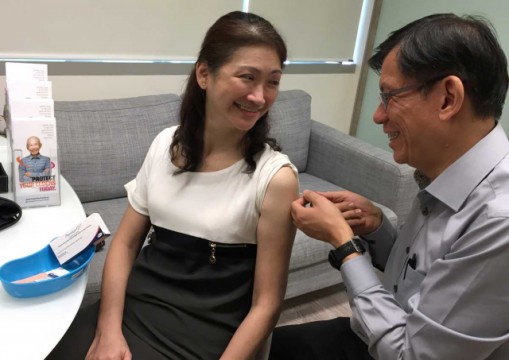
PHOTO: Elderly need to be vaccinated too. Pneumonia is third leading cause of death here.
Understanding that pneumonia is caused by viruses and bacteria, and that they cooperatively strike the patient, it makes sense to be vaccinated against them. Two vaccines that will help include the 4-valent (4 in 1) influenza vaccination and the pneumococcal vaccination.
For maximum benefit, individuals should take the influenza vaccination yearly, and both types of pneumococcal vaccination (PCV 13, PPV 23) at 65 years old.
These pneumonia vaccinations can be taken earlier (before 65) if there are other pre-existing conditions.
Picture posted by Foo Jie Ying, Reporter, The New Paper on 03 April 2017 at 06:00 am [3]
https://blogger.googleusercontent.com/img/b/R29vZ2xl/AVvXsEh9A65GlBuRKpdrcSaWj6heTmIf6zvQPC61IZk2ASzJYZLozYScAIFfW7WCCFJOl-X4LHlzQKpONGa_8YwApDGfT_yTqXyeNlq3ovdHZPuGP8aA8vsI02IftwZoDPp_VWg2V0eza2_CrjU/s1600/NP_20170403_JILIVE03-065_1530030.jpg
http://www.tnp.sg/sites/default/files/styles/rl680/public/articles/2017/04/03/NP_20170403_JILIVE03-065_1530030.jpg?itok=gLWNWd5N
http://www.tnp.sg/lifestyle/health/elderly-need-be-vaccinated-too
Those who are below 65 but have co-morbidities such as diabetes, kidney failure, cancer, HIV, chronic obstructive pulmonary disease or asthma are also encouraged to go for a pneumococcal jab.
Severe side effects are relatively uncommon - lower than 5 per cent, he added.
What causes pneumonia?
Common germs include the flu virus, the rhinovirus and a bacteria called streptococcus pneumoniae.
The types of organisms that cause a person to succumb to pneumonia depends, to a large extent, on the type of host.
Generally, previously well people in the community do not succumb to pneumonia due to fungi. That usually causes pneumonia in people who have impaired immunity, such as those with Aids, cancer or are undergoing chemotherapy.
What are some symptoms of pneumonia?
High fever, cough, purulent (containing pus) sputum, shortness of breath or chest pain.
Who is at risk?
Anyone may develop pneumonia but this is particularly common in the elderly and children.
How can one prevent pneumonia?
Aside from vaccinations, common-sense measures are also important. This includes frequent handwashing with soap and water, and avoiding crowded places. People who are unwell with fever, cough or runny nose should stay at home and not go to school or work.
If they have to go out, they should wear a mask and cough or sneeze into tissue paper.
How do you treat pneumonia?
Patients are best treated with antibiotics if it is due to bacteria and antivirals if it is due to influenza. If the condition is severe, or if the patient is either elderly, very young or has many co-morbid conditions, they should be treated in hospital.

Understanding that pneumonia is caused by viruses and bacteria, and that they cooperatively strike the patient, it makes sense to be vaccinated against them. Two vaccines that will help include the 4-valent (4 in 1) influenza vaccination and the pneumococcal vaccination.
For maximum benefit, individuals should take the influenza vaccination yearly, and both types of pneumococcal vaccination (PCV 13, PPV 23) at 65 years old.
These pneumonia vaccinations can be taken earlier (before 65) if there are other pre-existing conditions.
Picture posted by Foo Jie Ying, Reporter, The New Paper on 03 April 2017 at 06:00 am [3]
https://blogger.googleusercontent.com/img/b/R29vZ2xl/AVvXsEh9A65GlBuRKpdrcSaWj6heTmIf6zvQPC61IZk2ASzJYZLozYScAIFfW7WCCFJOl-X4LHlzQKpONGa_8YwApDGfT_yTqXyeNlq3ovdHZPuGP8aA8vsI02IftwZoDPp_VWg2V0eza2_CrjU/s1600/NP_20170403_JILIVE03-065_1530030.jpg
http://www.tnp.sg/sites/default/files/styles/rl680/public/articles/2017/04/03/NP_20170403_JILIVE03-065_1530030.jpg?itok=gLWNWd5N
http://www.tnp.sg/lifestyle/health/elderly-need-be-vaccinated-too
Those who are below 65 but have co-morbidities such as diabetes, kidney failure, cancer, HIV, chronic obstructive pulmonary disease or asthma are also encouraged to go for a pneumococcal jab.
Severe side effects are relatively uncommon - lower than 5 per cent, he added.
What causes pneumonia?
Common germs include the flu virus, the rhinovirus and a bacteria called streptococcus pneumoniae.
The types of organisms that cause a person to succumb to pneumonia depends, to a large extent, on the type of host.
Generally, previously well people in the community do not succumb to pneumonia due to fungi. That usually causes pneumonia in people who have impaired immunity, such as those with Aids, cancer or are undergoing chemotherapy.
What are some symptoms of pneumonia?
High fever, cough, purulent (containing pus) sputum, shortness of breath or chest pain.
Who is at risk?
Anyone may develop pneumonia but this is particularly common in the elderly and children.
How can one prevent pneumonia?
Aside from vaccinations, common-sense measures are also important. This includes frequent handwashing with soap and water, and avoiding crowded places. People who are unwell with fever, cough or runny nose should stay at home and not go to school or work.
If they have to go out, they should wear a mask and cough or sneeze into tissue paper.
How do you treat pneumonia?
Patients are best treated with antibiotics if it is due to bacteria and antivirals if it is due to influenza. If the condition is severe, or if the patient is either elderly, very young or has many co-morbid conditions, they should be treated in hospital.
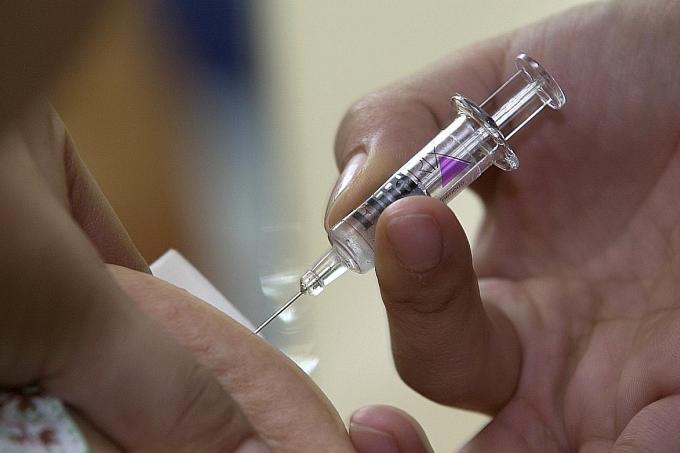
PHOTO: Get vaccinated against pneumonia
According to the Ministry of Health (MOH), pneumonia is one of the top killers, second only to cancer, in Singapore. Last year (2014), it remained the number one killer for those aged 70 and older. According to MOH, pneumonia caused nearly one in five deaths in Singapore in 2014. Hospitalisation records indicate that pneumonia remains the fifth most common cause, with more than 13,000 admitted for that in 2013. Those most susceptible to the infection include adults above 65 years, children under two, and those with medical conditions such as diabetes and chronic heart or lung disease.
Some doctors have urged that the elderly, young children and those who have compromised immune systems get vaccinated against pneumococcal disease, one of the major cause of pneumonia in Singapore. Dr Wong Hang Siang, a respiratory and critical care medicine physician from Changi General Hospital, said: "Every infection is a cause of concern as this disease causes high mortality even with antibiotics treatment."
Picture posted by The New Paper on 07 September 2015 [2]
https://blogger.googleusercontent.com/img/b/R29vZ2xl/AVvXsEgISWpnZBF4eE_8wScN1YqLi8K9Eti5so3rTx588yC20EBQK8c2Pw6AnQb6IahQSXBfkpIbdGJW-yYwB5hc8THzhzbET-IbCaQYRtyKiWIhWGOdb0ZZrGfPwUrFa61h4GuaTpfjfpZ65SY/s1600/20150907_vaccine_0.jpg
http://www.asiaone.com/sites/default/files/styles/640x360/public/health/20150907_vaccine_0.jpg?itok=AaksHsV8
http://www.asiaone.com/health/get-vaccinated-against-pneumonia
[2] The New Paper, Get vaccinated against pneumonia, posted on 07 September 2015 at 06:00 am, http://www.asiaone.com/health/get-vaccinated-against-pneumonia
[3] Foo Jie Ying, Reporter, The New Paper, Elderly need to be vaccinated too, posted on 03 April 2017 at 06:00 am, http://www.tnp.sg/lifestyle/health/elderly-need-be-vaccinated-too
Links
According to the Ministry of Health (MOH), pneumonia is one of the top killers, second only to cancer, in Singapore. Last year (2014), it remained the number one killer for those aged 70 and older. According to MOH, pneumonia caused nearly one in five deaths in Singapore in 2014. Hospitalisation records indicate that pneumonia remains the fifth most common cause, with more than 13,000 admitted for that in 2013. Those most susceptible to the infection include adults above 65 years, children under two, and those with medical conditions such as diabetes and chronic heart or lung disease.
Some doctors have urged that the elderly, young children and those who have compromised immune systems get vaccinated against pneumococcal disease, one of the major cause of pneumonia in Singapore. Dr Wong Hang Siang, a respiratory and critical care medicine physician from Changi General Hospital, said: "Every infection is a cause of concern as this disease causes high mortality even with antibiotics treatment."
Picture posted by The New Paper on 07 September 2015 [2]
https://blogger.googleusercontent.com/img/b/R29vZ2xl/AVvXsEgISWpnZBF4eE_8wScN1YqLi8K9Eti5so3rTx588yC20EBQK8c2Pw6AnQb6IahQSXBfkpIbdGJW-yYwB5hc8THzhzbET-IbCaQYRtyKiWIhWGOdb0ZZrGfPwUrFa61h4GuaTpfjfpZ65SY/s1600/20150907_vaccine_0.jpg
http://www.asiaone.com/sites/default/files/styles/640x360/public/health/20150907_vaccine_0.jpg?itok=AaksHsV8
http://www.asiaone.com/health/get-vaccinated-against-pneumonia
By Foo Jie Ying, Reporter, The New Paper, 04 December 2017 at 06:00 am
Get The New Paper on your phone with the free TNP app. Download from the Apple App Store or Google Play Store now
Reference
[1] Foo Jie Ying, Reporter, The New Paper, Vaccination can prevent pneumonia, posted on 04 December 2017 at 06:00 am, http://www.tnp.sg/lifestyle/health/vaccination-can-prevent-pneumonia[2] The New Paper, Get vaccinated against pneumonia, posted on 07 September 2015 at 06:00 am, http://www.asiaone.com/health/get-vaccinated-against-pneumonia
[3] Foo Jie Ying, Reporter, The New Paper, Elderly need to be vaccinated too, posted on 03 April 2017 at 06:00 am, http://www.tnp.sg/lifestyle/health/elderly-need-be-vaccinated-too
Links
Apple App Store - https://itunes.apple.com/sg/app/the-new-paper/id949361491?mt=8
Google Play Store - https://play.google.com/store/apps/details?id=com.sph.mypaperpdf&hl=en
Google Play Store - https://play.google.com/store/apps/details?id=com.sph.mypaperpdf&hl=en
- https://blogger.googleusercontent.com/img/b/R29vZ2xl/AVvXsEiNqzqJiuHpcmFffEOLmMD4X1x-rOHfkAGhNUjHfvjOc8pAGSnyXs_8-poBM0oFoaHbSoNc8g-lc4MY_-ypfsmv87LGIaDQUIF36hIinUdYymalUueumQGyUEzUi8QkS2XSEcGsRg-Xb8g/s1600/NP_20171204_JILIVE04-M55_1672991.jpg
- http://www.tnp.sg/sites/default/files/styles/pillarboxed_portrait/public/articles/2017/12/04/NP_20171204_JILIVE04-M55_1672991.jpg?itok=qdUYmlM0
- http://www.tnp.sg/lifestyle/health/vaccination-can-prevent-pneumonia
- https://blogger.googleusercontent.com/img/b/R29vZ2xl/AVvXsEh9A65GlBuRKpdrcSaWj6heTmIf6zvQPC61IZk2ASzJYZLozYScAIFfW7WCCFJOl-X4LHlzQKpONGa_8YwApDGfT_yTqXyeNlq3ovdHZPuGP8aA8vsI02IftwZoDPp_VWg2V0eza2_CrjU/s1600/NP_20170403_JILIVE03-065_1530030.jpg
- http://www.tnp.sg/sites/default/files/styles/rl680/public/articles/2017/04/03/NP_20170403_JILIVE03-065_1530030.jpg?itok=gLWNWd5N
- http://www.tnp.sg/lifestyle/health/elderly-need-be-vaccinated-too
- https://blogger.googleusercontent.com/img/b/R29vZ2xl/AVvXsEgISWpnZBF4eE_8wScN1YqLi8K9Eti5so3rTx588yC20EBQK8c2Pw6AnQb6IahQSXBfkpIbdGJW-yYwB5hc8THzhzbET-IbCaQYRtyKiWIhWGOdb0ZZrGfPwUrFa61h4GuaTpfjfpZ65SY/s1600/20150907_vaccine_0.jpg
- http://www.asiaone.com/sites/default/files/styles/640x360/public/health/20150907_vaccine_0.jpg?itok=AaksHsV8
- http://www.asiaone.com/health/get-vaccinated-against-pneumonia


 Posts
Posts










.jpg)
.gif)