Source (book): "In The Beginning", Tracing The Gospel Story In Genesis, Chapter 8, "God's Rainbow (Genesis 7:11-9:29)", Question 2, "Meaning of God calling the rainbow 'His'", Page 65.
By Robert M. Solomon, Bishop of the Methodist Church in Singapore from 2000 - 2012
By Robert M. Solomon, Bishop of the Methodist Church in Singapore from 2000 - 2012

PHOTO: What does the fact that God calling the rainbow 'His' mean to you?
God owning the rainbow means He is fully in control of His grace, His judgment, and His relationship with us.
In Chapter 8 of In The Beginning: Tracing The Gospel Story in Genesis, Dr. Robert M. Solomon unpacks how the gospel is hidden inside the ancient text. When God calls it "My bow" (keshet in Hebrew), it brings three very deep, personal meanings to light, explained here in simple terms:
In the original Hebrew text, God did not use a special word for "rainbow"—He literally just said "My bow"
Look closely at how a rainbow shapes itself in the sky. It curves upwards, pointing towards the heavens, not down at the earth.
God specifically states, "I will see it and remember the everlasting covenant" (Genesis 9:16).
(Answers are provided by Google AI Mode).
God owning the rainbow means He is fully in control of His grace, His judgment, and His relationship with us.
In Chapter 8 of In The Beginning: Tracing The Gospel Story in Genesis, Dr. Robert M. Solomon unpacks how the gospel is hidden inside the ancient text. When God calls it "My bow" (keshet in Hebrew), it brings three very deep, personal meanings to light, explained here in simple terms:
1. The Weapon of War is Hung Up 🏹
In the original Hebrew text, God did not use a special word for "rainbow"—He literally just said "My bow"
- The Picture: Think of a soldier coming back from a long battle. When the war is won and peace is declared, he doesn't hold the weapon ready to shoot anymore. Instead, he hangs his bow up on the wall.
- What it means for us: By hanging His "war-bow" in the clouds, God is visually showing Noah—and all of us—that the great flood of His wrath is over. He has laid down His weapon. He promises never to destroy the earth with a flood again.
2. The Arrow Points Upwards, Away from Us ☝️
Look closely at how a rainbow shapes itself in the sky. It curves upwards, pointing towards the heavens, not down at the earth.
- The Picture: If you were to put an arrow into that cosmic bow, the arrow would fire straight up into the heart of heaven, completely away from mankind.
- What it means for us: This traces the beautiful gospel story. Human beings still sin and deserve judgment, but God's bow isn't aimed at us anymore. Instead, the ultimate arrows of divine judgment were directed upwards, falling entirely upon Jesus Christ on the cross. Jesus took the hit so that we could receive peace.
3. It is God’s Personal Sign, Not Ours
God specifically states, "I will see it and remember the everlasting covenant" (Genesis 9:16).
- The Picture: The rainbow is like a giant, colorful sticky-note that God sets in the clouds for Himself to look at. Even when dark, scary storm clouds gather over our lives and we cannot see clearly, God is looking at His bow.
- What it means for us: Our relationship with God does not depend on our own weak efforts or how good we are at keeping promises. The rainbow belongs to Him. Because it is His bow, the covenant is completely unconditional, totally secure, and firmly held together by His everlasting mercy.
Picture posted by Angela Chanel on Wednesday, 06 June 2018 at 03:02 am
https://blogger.googleusercontent.com/img/b/R29vZ2xl/AVvXsEgwDR8etQ6DdLVYPTGuvnpTt0ZgIOxi02t0DCuiTtQladlaIgktnpjME7Fa06gKkhL8jIPAgmPzXoMpZ1wW37EKYrpOSFp83uhe9Osy66JZEvbU91yGbOlsNw3cWbwBWgOlG2bUezl84BYILfPUsluILT9fo_W2aOvDUWzURYbF0e4kVW5uA6JgERfp8Gc/s1984/34493174_621167728233998_1953417973091794944_n_1.png
https://scontent.fsin14-1.fna.fbcdn.net/v/t1.6435-9/34493174_621167728233998_1953417973091794944_n.jpg?stp=dst-jpg_tt6&cstp=mx1000x563&ctp=s1000x563&_nc_cat=109&_nc_map=urlgen_bucketless&ccb=1-7&_nc_sid=536f4a&_nc_ohc=TAfxyffdQiQQ7kNvwHsACHF&_nc_oc=Adpejfo3UWItCZL0xHt2iSWJsoDRdaOw7r7n7P5izH3CNOBtejwu3BYW_u9KZVpwSSU&_nc_zt=23&_nc_ht=scontent.fsin14-1.fna&_nc_gid=Ld9P0bGNFGNYObAuefrmdQ&_nc_ss=7b2a8&oh=00_AQOTZI2RjNxGbxBAlhLpJGXNmwblxr3fzblfS9HbEl4zVQ&oe=6B014AC6
https://www.facebook.com/photo/?fbid=621167721567332&set=gm.2027404817333368
What does the fact that God calling the rainbow 'His' mean to you?
God owning the rainbow means He is fully in control of His grace, His judgment, and His relationship with us.
In Chapter 8 of In The Beginning: Tracing The Gospel Story in Genesis, Dr. Robert M. Solomon unpacks how the gospel is hidden inside the ancient text. When God calls it "My bow" (keshet in Hebrew), it brings three very deep, personal meanings to light, explained here in simple terms:
https://blogger.googleusercontent.com/img/b/R29vZ2xl/AVvXsEgwDR8etQ6DdLVYPTGuvnpTt0ZgIOxi02t0DCuiTtQladlaIgktnpjME7Fa06gKkhL8jIPAgmPzXoMpZ1wW37EKYrpOSFp83uhe9Osy66JZEvbU91yGbOlsNw3cWbwBWgOlG2bUezl84BYILfPUsluILT9fo_W2aOvDUWzURYbF0e4kVW5uA6JgERfp8Gc/s1984/34493174_621167728233998_1953417973091794944_n_1.png
https://scontent.fsin14-1.fna.fbcdn.net/v/t1.6435-9/34493174_621167728233998_1953417973091794944_n.jpg?stp=dst-jpg_tt6&cstp=mx1000x563&ctp=s1000x563&_nc_cat=109&_nc_map=urlgen_bucketless&ccb=1-7&_nc_sid=536f4a&_nc_ohc=TAfxyffdQiQQ7kNvwHsACHF&_nc_oc=Adpejfo3UWItCZL0xHt2iSWJsoDRdaOw7r7n7P5izH3CNOBtejwu3BYW_u9KZVpwSSU&_nc_zt=23&_nc_ht=scontent.fsin14-1.fna&_nc_gid=Ld9P0bGNFGNYObAuefrmdQ&_nc_ss=7b2a8&oh=00_AQOTZI2RjNxGbxBAlhLpJGXNmwblxr3fzblfS9HbEl4zVQ&oe=6B014AC6

https://www.facebook.com/photo/?fbid=621167721567332&set=gm.2027404817333368
What does the fact that God calling the rainbow 'His' mean to you?
God owning the rainbow means He is fully in control of His grace, His judgment, and His relationship with us.
In Chapter 8 of In The Beginning: Tracing The Gospel Story in Genesis, Dr. Robert M. Solomon unpacks how the gospel is hidden inside the ancient text. When God calls it "My bow" (keshet in Hebrew), it brings three very deep, personal meanings to light, explained here in simple terms:

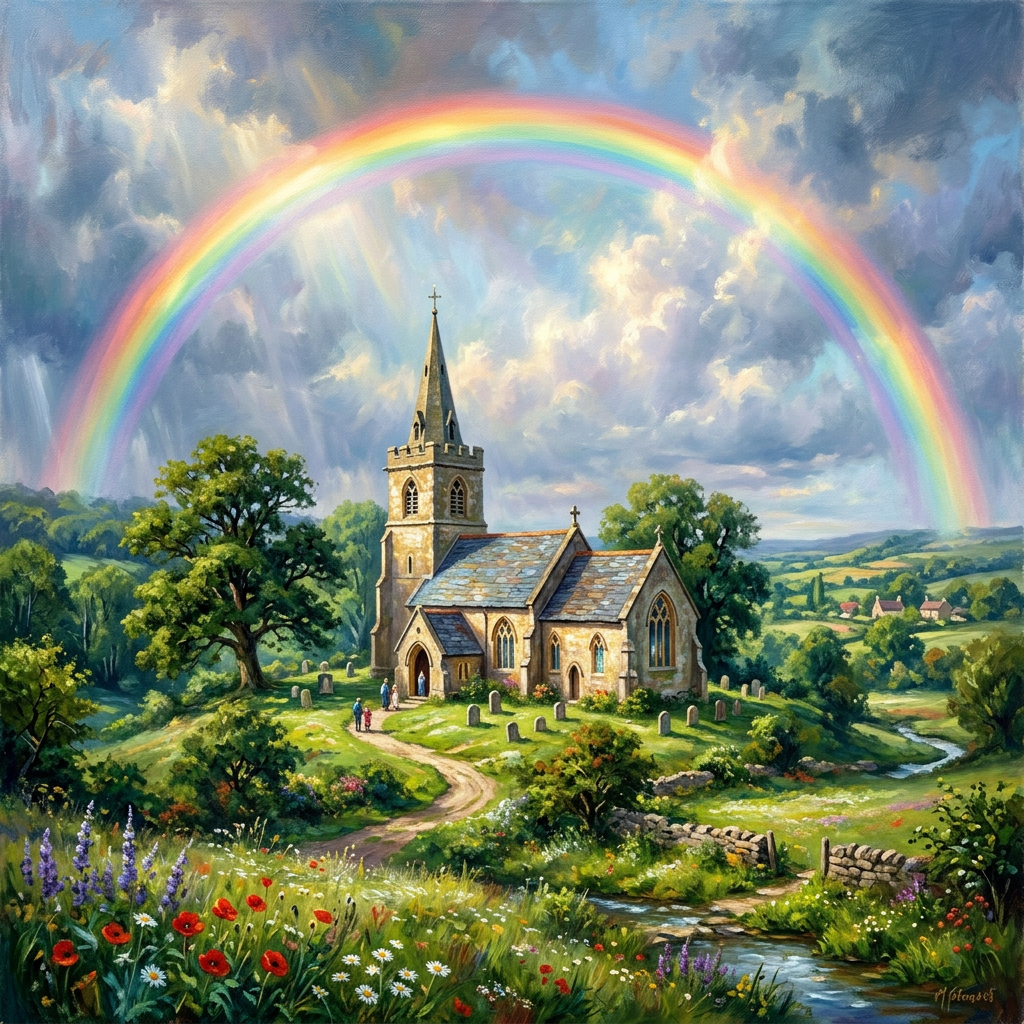
PHOTO: God owning the rainbow means He is fully in control of His grace, His judgment, and His relationship with us.
Picture posted by Easy-Peasy.AI - Ethereal Rainbow Over Old-World Church Art
https://blogger.googleusercontent.com/img/b/R29vZ2xl/AVvXsEjt4hgQkfG46HEM_UMkPO4DtbP7D2grpg9QU9yMYevAPBYKFENOr16O5LK4QmGK3r9oevICkgVHD92XvMQAszlcOLITfyBGqkcIkqLz88NKnEep1t_OU8aseXfptc41fKgJHHnNl7vKMdPxjfifFdlE9WiDMQOd27YCplEPVTGEJmu0bNgNzbs_JaVIxDc/s1984/444b2a81-295f-47db-b638-3f9c54ed3171_ImgUpscaler_Enhanced.png
https://media.easy-peasy.ai/a8cb5764-e3b2-4db9-bf2d-8022256ec2a7/444b2a81-295f-47db-b638-3f9c54ed3171.png
https://easy-peasy.ai/ai-image-generator/images/ethereal-rainbow-over-old-world-church-art
1. The Weapon of War is Hung Up 🏹
In the original Hebrew text, God did not use a special word for "rainbow"—He literally just said "My bow"
- The Picture: Think of a soldier coming back from a long battle. When the war is won and peace is declared, he doesn't hold the weapon ready to shoot anymore. Instead, he hangs his bow up on the wall.
- What it means for us: By hanging His "war-bow" in the clouds, God is visually showing Noah—and all of us—that the great flood of His wrath is over. He has laid down His weapon. He promises never to destroy the earth with a flood again.

PHOTO: The Weapon of War is Hung Up 🏹
The Picture: Think of a soldier coming back from a long battle. When the war is won and peace is declared, he doesn't hold the weapon ready to shoot anymore. Instead, he hangs his bow up on the wall.
Picture courtesy of Feeding on Christ
Picture posted by Peter Somervell on 24 July 2020 - God's Bow
https://blogger.googleusercontent.com/img/b/R29vZ2xl/AVvXsEiz5pLwg8kvQgwtI-ayyTESbZFBpG27FCDwpS4gmGaUVe8GYs-V_ayldHL8qyPFsPogyTkTMWUUyqlXaDpGivRnipGJjTF7J1_ItUos9n2zezsfYU94v4KhNgmQrUBQ3Jc8M79w0pxnigMaI8RW7E1qWVOJw0808VXjmAy1BqhqBn1JT5O72pf-zlN6d0c/s1984/warbow_PixelcutExtended_ImgUpscaler_1_Enhanced.png
https://petersomervell.wordpress.com/wp-content/uploads/2020/07/warbow.jpg?w=624

https://petersomervell.wordpress.com/2020/07/24/gods-bow/

PHOTO: The Weapon of War is Hung Up 🏹
What it means for us: By hanging His "war-bow" in the clouds, God is visually showing Noah—and all of us—that the great flood of His wrath is over. He has laid down His weapon. He promises never to destroy the earth with a flood again.
Picture posted by Teeming Thoughts on Wednesday, 25 February 2026 at 05:16 am
https://blogger.googleusercontent.com/img/b/R29vZ2xl/AVvXsEgZx2e-FULaDbcW_32uhPZE9pB0pSwqmMeZPdqgXme_6aeajHavbC8QNBbZjGd_yE1g7Rm1R1FFn_h0xmXnT0xUSa5yuvaFg4DSDTJBtkUKpZBA8o7OWSSB5EmnTxqUWAEJB1bg94HABDXqxp97aZWBZEl2etYSDa_efVcjzUZStI-lHEhA_ggNWVyhrzw/s2304/641522255_937613485453681_565998237750717715_n_1.png
https://scontent.fsin15-2.fna.fbcdn.net/v/t39.30808-6/641522255_937613485453681_565998237750717715_n.jpg?stp=dst-jpg_tt6&cstp=mx1536x2048&ctp=s1536x2048&_nc_cat=108&_nc_map=urlgen_bucketless&ccb=1-7&_nc_sid=aa7b47&_nc_ohc=xmLAnoQBkeEQ7kNvwHM5qsi&_nc_oc=AdoNCwf0-3iSPc5glS17kqeftBKoTYXUdHv9voJbsCcztxZ0nIkqYjtLCTboO5wqkWI&_nc_zt=23&_nc_ht=scontent.fsin15-2.fna&_nc_gid=sEbyanUuGKilxKKDERSwTw&_nc_ss=7b2a8&oh=00_AQOTm71erf0Z6tiLNdfEhii1pQ7tOh7tRaravBq4JDEMzQ&oe=6ADFD13B

https://www.facebook.com/photo/?fbid=937613482120348&set=gm.10162810908279958&idorvanity=8102214957
2. The Arrow Points Upwards, Away from Us ☝️
Look closely at how a rainbow shapes itself in the sky. It curves upwards, pointing towards the heavens, not down at the earth.
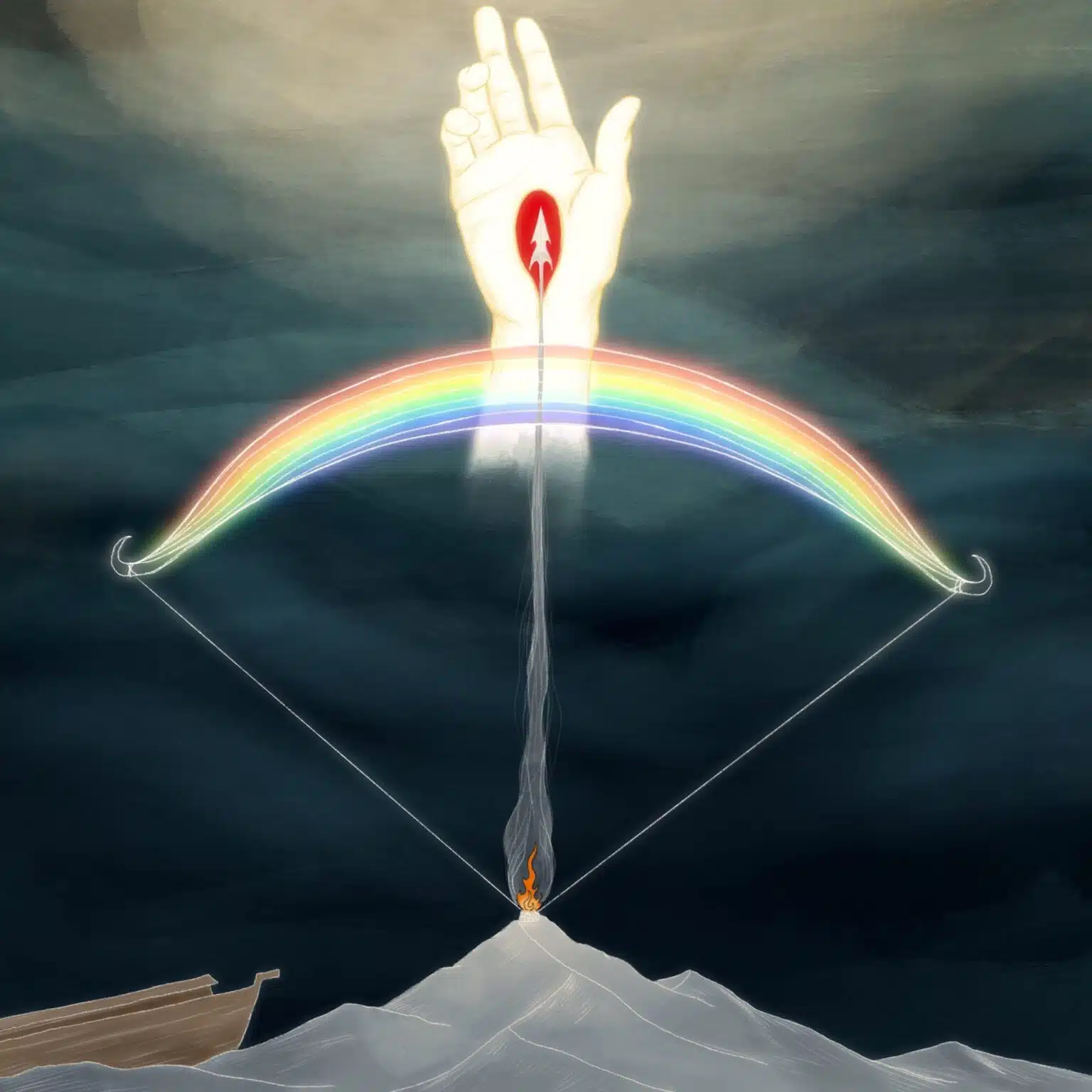
- The Picture: If you were to put an arrow into that cosmic bow, the arrow would fire straight up into the heart of heaven, completely away from mankind.
- What it means for us: This traces the beautiful gospel story. Human beings still sin and deserve judgment, but God's bow isn't aimed at us anymore. Instead, the ultimate arrows of divine judgment were directed upwards, falling entirely upon Jesus Christ on the cross. Jesus took the hit so that we could receive peace.

PHOTO: The Arrow Points Upwards, Away from Us ☝️
The Picture: If you were to put an arrow into that cosmic bow, the arrow would fire straight up into the heart of heaven, completely away from mankind.
Picture posted by dalle2, reddit 3 years ago
https://blogger.googleusercontent.com/img/b/R29vZ2xl/AVvXsEgycFCH2vWRizM8A5sfa8oXPlEl6t_SrtHWLxhPJh-MOC0kMNtiZP8mygqGrywHuFy76k5r1xLuEq-Y9WdyXARuFRT79bOj8zNyqbomle1DtPyGvT_be_kRdyBmHV82ju0945Lcw-LOx-BKnvNQKz_Fdc1T6ZW-XxloElEoppMdMlrvZFAVsbCvqgb2C_s/s1984/yahweh-as-a-storm-god-armed-with-a-rain-war-bow-v0-abbvgwhrjdwb1_ImgUpscaler_x2.png
https://www.reddit.com/media?url=https%3A%2F%2Fcf.preview.redd.it%2Fyahweh-as-a-storm-god-armed-with-a-rain-war-bow-v0-abbvgwhrjdwb1.jpg%3Fwidth%3D1024%26format%3Dpjpg%26auto%3Dwebp%26s%3Db180b077a3934674c0847aed285b681a5f0becc1

https://www.reddit.com/r/dalle2/comments/17g8mig/yahweh_as_a_storm_god_armed_with_a_rainwarbow/

PHOTO: The Arrow Points Upwards, Away from Us ☝️
What it means for us: This traces the beautiful gospel story. Human beings still sin and deserve judgment, but God's bow isn't aimed at us anymore. Instead, the ultimate arrows of divine judgment were directed upwards, falling entirely upon Jesus Christ on the cross. Jesus took the hit so that we could receive peace.
Picture posted by Full of Eyes
https://blogger.googleusercontent.com/img/b/R29vZ2xl/AVvXsEidugKaQ1UmQr0Qh0oJMfvx_nmOw63GnF2DhfonCqnoc6tDAwvq4AW_UtjrHRcjqm3y3h8yiNBqu-uYIP1arQq88uDk4pGa0THmp7hsvGwP8OrBqb5ECjo871EZq2ary9eMwh0cnACx3xs_PB2VyIMu5xAWgxG5xym7uv-pMNTm1vXFNoOZnfuMmyglRnE/s2000/The-Bow-1536x1536_ImgUpscaler_Enhanced.png
https://www.fullofeyes.com/wp-content/uploads/2017/06/The-Bow-1536x1536.jpg.webp
https://www.fullofeyes.com/3350-2/
3. It is God’s Personal Sign, Not Ours
God specifically states, "I will see it and remember the everlasting covenant" (Genesis 9:16).
- The Picture: The rainbow is like a giant, colorful sticky-note that God sets in the clouds for Himself to look at. Even when dark, scary storm clouds gather over our lives and we cannot see clearly, God is looking at His bow.
- What it means for us: Our relationship with God does not depend on our own weak efforts or how good we are at keeping promises. The rainbow belongs to Him. Because it is His bow, the covenant is completely unconditional, totally secure, and firmly held together by His everlasting mercy.

PHOTO: It is God’s Personal Sign, Not Ours
The Picture: The rainbow is like a giant, colorful sticky-note that God sets in the clouds for Himself to look at. Even when dark, scary storm clouds gather over our lives and we cannot see clearly, God is looking at His bow.
Picture posted by Rev Alex Ateka on Thursday, 07 May 2026 at 02:23 am
https://blogger.googleusercontent.com/img/b/R29vZ2xl/AVvXsEjik26F7y9CvPjBiKLBnjOSj4_6_x5NUdwWnwgfmVxW_YMSJ7l5IbuM2dxZDGT398uTfZxmZCF0MAeZ9-Cj8RCui6DLyESgPgTcBkHvPzWDIH2J3DWLqiwINyN0HuS1jLXYB2aEt1TLEnhldp3cIwTMlc9ANwzmINzNUumiT3Ne7eVCPLENC14cVVI0k4U/s2432/687039998_1267637068886523_3605244367329298148_n_1.png
https://scontent.fsin14-1.fna.fbcdn.net/v/t39.30808-6/687039998_1267637068886523_3605244367329298148_n.jpg?stp=dst-jpg_tt6&cstp=mx900x1350&ctp=s900x1350&_nc_cat=106&_nc_map=urlgen_bucketless&ccb=1-7&_nc_sid=aa7b47&_nc_ohc=VdmMMnGZOVoQ7kNvwHwpD8F&_nc_oc=AdoQyE8bSVghMD8GUHVqd53ahXIdYRMOtOxucrRiPgKNrGNDsqS7Tlm3edDXXZdP3T0&_nc_zt=23&_nc_ht=scontent.fsin14-1.fna&_nc_gid=HF6KmEKaxpwvOxZVc6ahbA&_nc_ss=7b2a8&oh=00_AQPloDCbpeFvGoQJvzpSO8THHGZdFcs1hx3japp5eiFEmg&oe=6ADFE8A3

https://www.facebook.com/photo/?fbid=1267637228886507&set=gm.27423694863952194&idorvanity=616070131808031

PHOTO: It is God’s Personal Sign, Not Ours
What it means for us: Our relationship with God does not depend on our own weak efforts or how good we are at keeping promises. The rainbow belongs to Him. Because it is His bow, the covenant is completely unconditional, totally secure, and firmly held together by His everlasting mercy.
Picture posted by Karine Houde
https://blogger.googleusercontent.com/img/b/R29vZ2xl/AVvXsEjz7DHk64WnmnRUlWpu4-ZDsduAVr4LOHCDYaw86UNQt7i9pEmImx-trEcmlABV8Qln0-P3zw0h2StOSjtXvDV2as4sC7hnvegTTdWiscT5sYYXonHSFYxv0MAWKqU5P5mTCunJkGUYw1OvjlhkSpeq4WXAn3SwL8tuXLd8YUNwhm9hL9CfhNoFcVqZYns/s1984/0b33d4af16eb940f41e9bcc67aa40cd5_ImgUpscaler_Enhanced.png
https://i.pinimg.com/1200x/0b/33/d4/0b33d4af16eb940f41e9bcc67aa40cd5.jpg
https://de.pinterest.com/pin/908882768567933473/
https://i.pinimg.com/1200x/0b/33/d4/0b33d4af16eb940f41e9bcc67aa40cd5.jpg

https://de.pinterest.com/pin/908882768567933473/

PHOTO: "Dear Heavenly Father, Thank You for the beautiful reminder of Your rainbow in the sky. When I look up and see it, help me remember that You called it "My bow." Thank You for showing me that it is Your personal weapon of war, and that You have hung it up in the clouds to declare peace over my life.
Forgive me for the times I feel anxious or fearful when the dark storms of life gather. Remind me that the bow is curved upwards—pointing away from me—because Jesus took the arrow of judgment on the cross for my sins.
Thank You that Your covenant of grace does not depend on my own strength, but on Your absolute faithfulness.
Even when I cannot see through the rain, I am comforted knowing that You see Your bow and You will always remember Your promises to me.
I rest securely in Your love today, knowing that my life is held together entirely by Your mercy.
Through Lord Jesus Christ we pray. Amen."
Picture posted by rosario
https://blogger.googleusercontent.com/img/b/R29vZ2xl/AVvXsEgsLEgiSNitkU9Cn-j3GERMKQuEC66Zlyt6DHZW5Mp5pTrelwq7LmQjbOLHekbT2yJ1eJD5cclLGQ2tilSf6WjRAGXoGFQUMn9IKSaFcSnpZGyaV36ZyzWwJPv8esV_MSAdyuQ1l2hEM8j4gTNfLwQ7AeQu8GelvmwVnbpQ2oWqrRru8kyvuFEdYqgxIB0/s2240/f31edcc2b5ef9755080aba1d1b23f8a8_ImgUpscaler_1_Enhanced.png
https://i.pinimg.com/1200x/f3/1e/dc/f31edcc2b5ef9755080aba1d1b23f8a8.jpg

https://de.pinterest.com/pin/4011087182059562/
Reflection - Reflection - Meaning of God calling the rainbow 'His'
Source (book): "In The Beginning", Tracing The Gospel Story In Genesis, Chapter 8, "God's Rainbow (Genesis 7:11-9:29)", Question 2, "Meaning of God calling the rainbow 'His'", Page 65.
By Robert M. Solomon, Bishop of the Methodist Church in Singapore from 2000 - 2012
Footnotes
"Faithful to the end", A Preacher's Exposition of 2 Timothy, @ 2014 by Robert M. Solomon

Reflection - Faithful to the end (Links)
https://veryfatoldman.blogspot.com/2017/06/reflection-faithful-to-end-links.html
"Finding rest for the soul" Responding to Jesus' Invitation in Matthew 11:28-29, © 2016 by Robert M. Solomon
Reflection - Finding rest for the soul (Links)
https://veryfatoldman.blogspot.com/2018/10/reflection-finding-rest-for-soul-links.html
"God in Pursuit" Lessons from the Book of Jonah, © 2016 by Robert M. Solomon
Reflection - God in Pursuit (Links) - PART I-III, posted on Saturday, 10 August 2019
https://veryfatoldman.blogspot.com/2019/08/reflection-god-in-pursuit-links-part-i.html
"God in Pursuit" Lessons from the Book of Jonah, © 2016 by Robert M. Solomon
Reflection - God in Pursuit (Links) - PART IV, posted on Saturday, 10 August 2019
https://veryfatoldman.blogspot.com/2019/08/reflection-god-in-pursuit-links-part-iv.html
"Songs of Christmas", The Stories and Significance of 20 Well-Loved Carols, © 2018 by Robert M. Solomon

Reflection - Songs of Christmas (Links), posted on Friday, 24 April 2020
https://veryfatoldman.blogspot.com/2020/04/reflection-songs-of-christmas-links.html
Reflection - Faithful to the end (Links)
https://veryfatoldman.blogspot.com/2017/06/reflection-faithful-to-end-links.html
"Finding rest for the soul" Responding to Jesus' Invitation in Matthew 11:28-29, © 2016 by Robert M. Solomon
Reflection - Finding rest for the soul (Links)
https://veryfatoldman.blogspot.com/2018/10/reflection-finding-rest-for-soul-links.html
"God in Pursuit" Lessons from the Book of Jonah, © 2016 by Robert M. Solomon
Reflection - God in Pursuit (Links) - PART I-III, posted on Saturday, 10 August 2019
https://veryfatoldman.blogspot.com/2019/08/reflection-god-in-pursuit-links-part-i.html
"God in Pursuit" Lessons from the Book of Jonah, © 2016 by Robert M. Solomon
Reflection - God in Pursuit (Links) - PART IV, posted on Saturday, 10 August 2019
https://veryfatoldman.blogspot.com/2019/08/reflection-god-in-pursuit-links-part-iv.html
"Songs of Christmas", The Stories and Significance of 20 Well-Loved Carols, © 2018 by Robert M. Solomon
Reflection - Songs of Christmas (Links), posted on Friday, 24 April 2020
https://veryfatoldman.blogspot.com/2020/04/reflection-songs-of-christmas-links.html
"Growing Old Gracefully", Following Jesus to the End, © 2019 by Robert M. Solomon

Reflection - Growing Old Gracefully, Part I - III (Links), posted on Wednesday, 09 December 2020
https://veryfatoldman.blogspot.com/2020/12/reflection-growing-old-gracefully-part.html

Reflection - Growing Old Gracefully, Part IV - V (Links), posted on Thursday, 22 April 2021
https://veryfatoldman.blogspot.com/2020/12/reflection-growing-old-gracefully-part_9.html
"Teach Us to Number Our Days", © 2008 by David Roper

Reflection - Number Our Days, Chapter 1 - 40 (Links), posted on Tuesday, 16 November 2021
https://veryfatoldman.blogspot.com/2021/11/reflection-number-our-days-chapter-1-40.html
"Teach Us to Number Our Days", © 2008 by David Roper
Reflection - Number Our Days, Chapter 41 - 64 (Links), posted on Wednesday, 16 March 2022
https://veryfatoldman.blogspot.com/2022/03/reflection-number-our-days-chapter-41.html
"He Walks with Me - Devotions for Your Caregiving Journey with God", © 2018 by Our Daily Bread Ministries, Shelly Beach
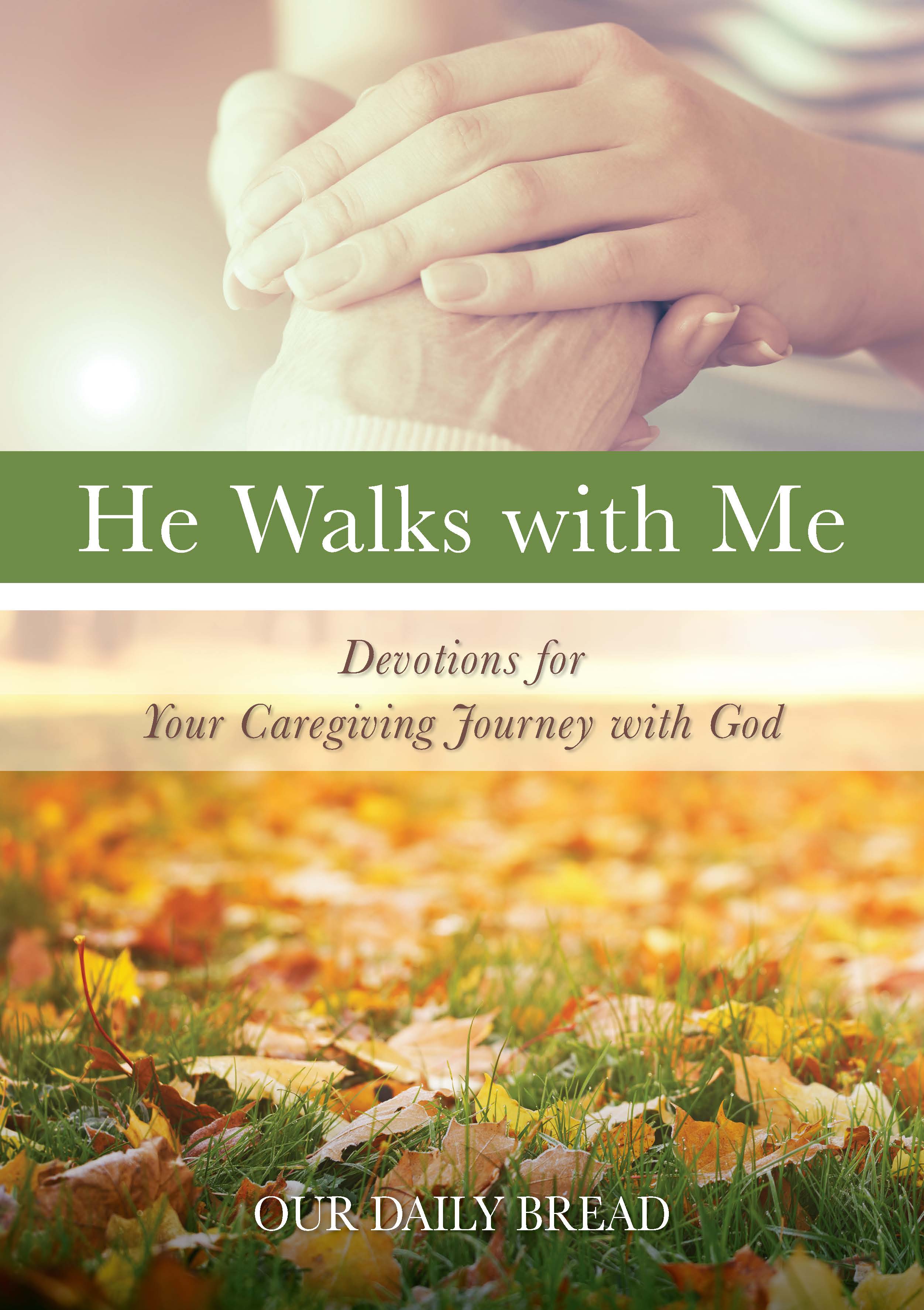 Reflection - He Walks with Me (Links), posted on Tuesday, 16 August 2022
https://veryfatoldman.blogspot.com/2022/08/reflection-he-walks-with-me-links.html
Reflection - He Walks with Me (Links), posted on Tuesday, 16 August 2022https://veryfatoldman.blogspot.com/2022/08/reflection-he-walks-with-me-links.html
"Classic Gem: Timeless Devotions from Our Daily Bread Authors", Copyright © 2021 by Our Daily Bread Ministries

Reflection - Classic Gem, Chapter 1 - 45 (Links), posted on 03 April 2023
https://veryfatoldman.blogspot.com/2023/04/reflection-classic-gem-chapter-1-45.html
"Classic Gem: Timeless Devotions from Our Daily Bread Authors", Copyright © 2021 by Our Daily Bread Ministries
Reflection - Classic Gem, Chapter 46 - 90 (Links), posted on Tuesday, 24 October 2023
https://veryfatoldman.blogspot.com/2023/10/reflection-classic-gem-chapter-46-90.html
"Making All Things New", 52 Reflections to Challenge the Way You Live, Copyright @ 2022 by Robert M. Solomon

Reflection - Making All Things New, Chapter 1 - 28 (Links), posted on Saturday, 04 August 2024
https://veryfatoldman.blogspot.com/2024/08/reflection-making-all-things-new.html
"Making All Things New", 52 Reflections to Challenge the Way You Live, Copyright @ 2022 by Robert M. Solomon
Reflection - Making All Things New, Chapter 29 - 52 (Links), posted on Saturday, 15 March 2025
https://veryfatoldman.blogspot.com/2025/03/reflection-making-all-things-new.html

Reflection - My Soul Thirsts For God, Verse 1 - 46 (Links) on Monday, 25 August 2025
https://veryfatoldman.blogspot.com/2025/08/reflection-my-soul-thirsts-for-god.html
Reflection - My Soul Thirsts For God, Verse 47 - 92 (Links) on Tuesday, 27 January 2026
https://veryfatoldman.blogspot.com/2026/01/reflection-my-soul-thirsts-for-god.html
Reference
[1] From "In The Beginning", Tracing The Gospel Story In Genesis, Copyright @ 2009 by Robert M. Solomon, Chapter 8, "God's Rainbow (Genesis 7:11-9:29)", Question 2, "Meaning of God calling the rainbow 'His'", Page 65.
Links
New International Version (NIV), Holy Bible, New International Version®, NIV® Copyright ©1973, 1978, 1984, 2011 by Biblica, Inc.® Used by permission. All rights reserved worldwide.
Genesis 7:11-9:29 - https://www.biblegateway.com/passage/?search=Genesis%207%3A11-9%3A29&version=NIV
Genesis 9:16 - https://www.biblegateway.com/passage/?search=Genesis%209%3A16&version=NIV
Matthew 11:28-29 - https://www.biblegateway.com/passage/?search=Matthew+11%3A28-29&version=NIV
Genesis 9:16 - https://www.biblegateway.com/passage/?search=Genesis%209%3A16&version=NIV
Matthew 11:28-29 - https://www.biblegateway.com/passage/?search=Matthew+11%3A28-29&version=NIV
- https://blogger.googleusercontent.com/img/b/R29vZ2xl/AVvXsEgwDR8etQ6DdLVYPTGuvnpTt0ZgIOxi02t0DCuiTtQladlaIgktnpjME7Fa06gKkhL8jIPAgmPzXoMpZ1wW37EKYrpOSFp83uhe9Osy66JZEvbU91yGbOlsNw3cWbwBWgOlG2bUezl84BYILfPUsluILT9fo_W2aOvDUWzURYbF0e4kVW5uA6JgERfp8Gc/s1984/34493174_621167728233998_1953417973091794944_n_1.png
- https://scontent.fsin14-1.fna.fbcdn.net/v/t1.6435-9/34493174_621167728233998_1953417973091794944_n.jpg?stp=dst-jpg_tt6&cstp=mx1000x563&ctp=s1000x563&_nc_cat=109&_nc_map=urlgen_bucketless&ccb=1-7&_nc_sid=536f4a&_nc_ohc=TAfxyffdQiQQ7kNvwHsACHF&_nc_oc=Adpejfo3UWItCZL0xHt2iSWJsoDRdaOw7r7n7P5izH3CNOBtejwu3BYW_u9KZVpwSSU&_nc_zt=23&_nc_ht=scontent.fsin14-1.fna&_nc_gid=Ld9P0bGNFGNYObAuefrmdQ&_nc_ss=7b2a8&oh=00_AQOTZI2RjNxGbxBAlhLpJGXNmwblxr3fzblfS9HbEl4zVQ&oe=6B014AC6
- https://www.facebook.com/photo/?fbid=621167721567332&set=gm.2027404817333368
- https://blogger.googleusercontent.com/img/b/R29vZ2xl/AVvXsEjt4hgQkfG46HEM_UMkPO4DtbP7D2grpg9QU9yMYevAPBYKFENOr16O5LK4QmGK3r9oevICkgVHD92XvMQAszlcOLITfyBGqkcIkqLz88NKnEep1t_OU8aseXfptc41fKgJHHnNl7vKMdPxjfifFdlE9WiDMQOd27YCplEPVTGEJmu0bNgNzbs_JaVIxDc/s1984/444b2a81-295f-47db-b638-3f9c54ed3171_ImgUpscaler_Enhanced.png
- https://media.easy-peasy.ai/a8cb5764-e3b2-4db9-bf2d-8022256ec2a7/444b2a81-295f-47db-b638-3f9c54ed3171.png
- https://easy-peasy.ai/ai-image-generator/images/ethereal-rainbow-over-old-world-church-art
- https://blogger.googleusercontent.com/img/b/R29vZ2xl/AVvXsEiz5pLwg8kvQgwtI-ayyTESbZFBpG27FCDwpS4gmGaUVe8GYs-V_ayldHL8qyPFsPogyTkTMWUUyqlXaDpGivRnipGJjTF7J1_ItUos9n2zezsfYU94v4KhNgmQrUBQ3Jc8M79w0pxnigMaI8RW7E1qWVOJw0808VXjmAy1BqhqBn1JT5O72pf-zlN6d0c/s1984/warbow_PixelcutExtended_ImgUpscaler_1_Enhanced.png
- https://petersomervell.wordpress.com/wp-content/uploads/2020/07/warbow.jpg?w=624
- https://petersomervell.wordpress.com/2020/07/24/gods-bow/
- https://blogger.googleusercontent.com/img/b/R29vZ2xl/AVvXsEgZx2e-FULaDbcW_32uhPZE9pB0pSwqmMeZPdqgXme_6aeajHavbC8QNBbZjGd_yE1g7Rm1R1FFn_h0xmXnT0xUSa5yuvaFg4DSDTJBtkUKpZBA8o7OWSSB5EmnTxqUWAEJB1bg94HABDXqxp97aZWBZEl2etYSDa_efVcjzUZStI-lHEhA_ggNWVyhrzw/s2304/641522255_937613485453681_565998237750717715_n_1.png
- https://scontent.fsin15-2.fna.fbcdn.net/v/t39.30808-6/641522255_937613485453681_565998237750717715_n.jpg?stp=dst-jpg_tt6&cstp=mx1536x2048&ctp=s1536x2048&_nc_cat=108&_nc_map=urlgen_bucketless&ccb=1-7&_nc_sid=aa7b47&_nc_ohc=xmLAnoQBkeEQ7kNvwHM5qsi&_nc_oc=AdoNCwf0-3iSPc5glS17kqeftBKoTYXUdHv9voJbsCcztxZ0nIkqYjtLCTboO5wqkWI&_nc_zt=23&_nc_ht=scontent.fsin15-2.fna&_nc_gid=sEbyanUuGKilxKKDERSwTw&_nc_ss=7b2a8&oh=00_AQOTm71erf0Z6tiLNdfEhii1pQ7tOh7tRaravBq4JDEMzQ&oe=6ADFD13B
- https://www.facebook.com/photo/?fbid=937613482120348&set=gm.10162810908279958&idorvanity=8102214957
- https://blogger.googleusercontent.com/img/b/R29vZ2xl/AVvXsEgycFCH2vWRizM8A5sfa8oXPlEl6t_SrtHWLxhPJh-MOC0kMNtiZP8mygqGrywHuFy76k5r1xLuEq-Y9WdyXARuFRT79bOj8zNyqbomle1DtPyGvT_be_kRdyBmHV82ju0945Lcw-LOx-BKnvNQKz_Fdc1T6ZW-XxloElEoppMdMlrvZFAVsbCvqgb2C_s/s1984/yahweh-as-a-storm-god-armed-with-a-rain-war-bow-v0-abbvgwhrjdwb1_ImgUpscaler_x2.png
- https://www.reddit.com/media?url=https%3A%2F%2Fcf.preview.redd.it%2Fyahweh-as-a-storm-god-armed-with-a-rain-war-bow-v0-abbvgwhrjdwb1.jpg%3Fwidth%3D1024%26format%3Dpjpg%26auto%3Dwebp%26s%3Db180b077a3934674c0847aed285b681a5f0becc1
- https://www.reddit.com/r/dalle2/comments/17g8mig/yahweh_as_a_storm_god_armed_with_a_rainwarbow/
- https://blogger.googleusercontent.com/img/b/R29vZ2xl/AVvXsEidugKaQ1UmQr0Qh0oJMfvx_nmOw63GnF2DhfonCqnoc6tDAwvq4AW_UtjrHRcjqm3y3h8yiNBqu-uYIP1arQq88uDk4pGa0THmp7hsvGwP8OrBqb5ECjo871EZq2ary9eMwh0cnACx3xs_PB2VyIMu5xAWgxG5xym7uv-pMNTm1vXFNoOZnfuMmyglRnE/s2000/The-Bow-1536x1536_ImgUpscaler_Enhanced.png
- https://www.fullofeyes.com/wp-content/uploads/2017/06/The-Bow-1536x1536.jpg.webp
- https://www.fullofeyes.com/3350-2/
- https://blogger.googleusercontent.com/img/b/R29vZ2xl/AVvXsEjik26F7y9CvPjBiKLBnjOSj4_6_x5NUdwWnwgfmVxW_YMSJ7l5IbuM2dxZDGT398uTfZxmZCF0MAeZ9-Cj8RCui6DLyESgPgTcBkHvPzWDIH2J3DWLqiwINyN0HuS1jLXYB2aEt1TLEnhldp3cIwTMlc9ANwzmINzNUumiT3Ne7eVCPLENC14cVVI0k4U/s2432/687039998_1267637068886523_3605244367329298148_n_1.png
- https://scontent.fsin14-1.fna.fbcdn.net/v/t39.30808-6/687039998_1267637068886523_3605244367329298148_n.jpg?stp=dst-jpg_tt6&cstp=mx900x1350&ctp=s900x1350&_nc_cat=106&_nc_map=urlgen_bucketless&ccb=1-7&_nc_sid=aa7b47&_nc_ohc=VdmMMnGZOVoQ7kNvwHwpD8F&_nc_oc=AdoQyE8bSVghMD8GUHVqd53ahXIdYRMOtOxucrRiPgKNrGNDsqS7Tlm3edDXXZdP3T0&_nc_zt=23&_nc_ht=scontent.fsin14-1.fna&_nc_gid=HF6KmEKaxpwvOxZVc6ahbA&_nc_ss=7b2a8&oh=00_AQPloDCbpeFvGoQJvzpSO8THHGZdFcs1hx3japp5eiFEmg&oe=6ADFE8A3
- https://www.facebook.com/photo/?fbid=1267637228886507&set=gm.27423694863952194&idorvanity=616070131808031
- https://blogger.googleusercontent.com/img/b/R29vZ2xl/AVvXsEjz7DHk64WnmnRUlWpu4-ZDsduAVr4LOHCDYaw86UNQt7i9pEmImx-trEcmlABV8Qln0-P3zw0h2StOSjtXvDV2as4sC7hnvegTTdWiscT5sYYXonHSFYxv0MAWKqU5P5mTCunJkGUYw1OvjlhkSpeq4WXAn3SwL8tuXLd8YUNwhm9hL9CfhNoFcVqZYns/s1984/0b33d4af16eb940f41e9bcc67aa40cd5_ImgUpscaler_Enhanced.png
- https://i.pinimg.com/1200x/0b/33/d4/0b33d4af16eb940f41e9bcc67aa40cd5.jpg
- https://de.pinterest.com/pin/908882768567933473/
- https://blogger.googleusercontent.com/img/b/R29vZ2xl/AVvXsEgsLEgiSNitkU9Cn-j3GERMKQuEC66Zlyt6DHZW5Mp5pTrelwq7LmQjbOLHekbT2yJ1eJD5cclLGQ2tilSf6WjRAGXoGFQUMn9IKSaFcSnpZGyaV36ZyzWwJPv8esV_MSAdyuQ1l2hEM8j4gTNfLwQ7AeQu8GelvmwVnbpQ2oWqrRru8kyvuFEdYqgxIB0/s2240/f31edcc2b5ef9755080aba1d1b23f8a8_ImgUpscaler_1_Enhanced.png
- https://i.pinimg.com/1200x/f3/1e/dc/f31edcc2b5ef9755080aba1d1b23f8a8.jpg
- https://de.pinterest.com/pin/4011087182059562/