Source: Bangalore (India), sales@grainfo.net, sales@anabooks.net
Published by: Gravity Infotainment, ISBN: 978-81-8394-301-7
Source Website: http://www.literaturecollection.com/a/doyle/sherlock-holmes/11/
Author: Sir Arthur Conan Doyle

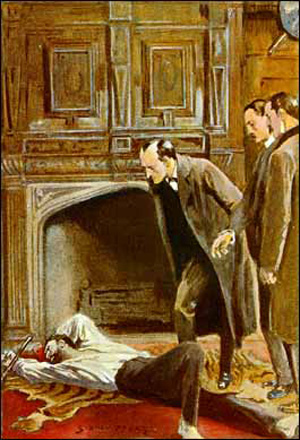
PHOTO: Adventures of Sherlock Holmes- The Beryl Coronet
https://blogger.googleusercontent.com/img/b/R29vZ2xl/AVvXsEjTdD7tTOToIM5Lz9sqdlA43Uu0G_hhum3qkEv4sowjVrzpeUzSrC3HPiSoPmSO33NNLJqCRTaH5MT4WsyFCHGPuf1sPmuRdN_IOxtYy3JInn3CKCt-PtJi2yRodTd2EncYv2NDSfYQqL0/s1600/pics_back...__37_32.jpg
http://www.99bookstore.com/media/catalog/product/cache/3/image/9df78eab33525d08d6e5fb8d27136e95/p/i/pics_back...__37_32.jpg
http://www.99bookstore.com/adventures-of-sherlock-holmes-the-beryl-coronet.html
Published by: Gravity Infotainment, ISBN: 978-81-8394-301-7
Source Website: http://www.literaturecollection.com/a/doyle/sherlock-holmes/11/
Author: Sir Arthur Conan Doyle
PHOTO: Adventures of Sherlock Holmes- The Beryl Coronet
https://blogger.googleusercontent.com/img/b/R29vZ2xl/AVvXsEjTdD7tTOToIM5Lz9sqdlA43Uu0G_hhum3qkEv4sowjVrzpeUzSrC3HPiSoPmSO33NNLJqCRTaH5MT4WsyFCHGPuf1sPmuRdN_IOxtYy3JInn3CKCt-PtJi2yRodTd2EncYv2NDSfYQqL0/s1600/pics_back...__37_32.jpg
http://www.99bookstore.com/media/catalog/product/cache/3/image/9df78eab33525d08d6e5fb8d27136e95/p/i/pics_back...__37_32.jpg
http://www.99bookstore.com/adventures-of-sherlock-holmes-the-beryl-coronet.html
It was a bright February morning in London. The wintry sun made the snow lying on the ground glitter like diamonds. There were hardly any people about on the roads. On this particular morning, Dr Watson's eyes were drawn to a strange sight outside the window of the lodgings he shared with the great detective, Sherlock Holmes, at 221B Baker Street London. A man was running with great speed, consternation writ large on his face. He would stop in between to mop the sweat off his face and then continue his sprint. The man seemed to be about fifty years old and was quite stout. His face was strongly marked and he had an imposing figure. He was well dressed but it was the way he ran that made him look eccentric. For he ran with little hops in between as if he was not used to putting much pressure on his legs. Also, as he ran, his hands kept making odd, jerky movements and his head waggled. Strange contortions marked his visage. Watson called to Holmes. "Holmes, take a look at this. A madman is on the loose." Holmes came to the window and observed the man with great interest. "It seems to me that we will soon have a visitor," he said drily. Sure enough, the doorbell rang within a few seconds and a little later, the maid ushered in the man whom they had seen sprinting outside. Still panting from his exertions, the man asked, looking from one man to the other, "Mr Holmes?" Holmes spoke. "That is me."
The man introduced himself as Mr Alexander Holder, a partner in a bank called Holder & Stevenson at Threadneedle Street. It was the second largest bank in London. It was quite obvious to Holmes and Watson that Mr Holder was in great distress. They could read the grief and despair in his eyes and it filled them with pity. Holmes said sympathetically, "Calm yourself, Mr Holder. Rest a while and then tell me what business you have with me." The man took a deep breath and said, "I have a problem, Mr Holmes. And a very vexing problem it is indeed. I went to the police but they told me that you are the man to solve it." Holmes gestured towards a chair and the man sat down. Holmes seated himself as well and leaned forward, curious to hear the man's story. "Proceed, Mr Holder." The man began. "My bank lends money to people, Mr Holmes. Yesterday morning, I had a visitor at my office. He was a very important man. I cannot reveal his name but I can tell you that it is one of the most exalted names in this country. My visitor was in urgent need of money. Fifty thousand pounds, to be precise. He told me that he could borrow the amount from his well-placed friends but he did not want to incur any obligation because it was unwise for a man of his position. I asked him when he would be able to repay the amount if I lent the money to him. He replied that he would return it before the following Monday. I would have given him the money from my own pocket but such a large amount was beyond my purse. I asked him if he had any collateral to offer.
The man took out a jewel case and opened it. Inside the case was a very beautiful ornament. He asked me if I had heard of the Beryl coronet. I told him I had. It is one of the most treasured public possessions of the British Empire and is rumoured to be very expensive. Then he told me that the ornament was in fact the Beryl coronet. It was this that he planned to offer as collateral. He also told me that the ornament was made of thirty-nine big beryl stones and the cost of the gold chase was beyond calculation. The coronet was worth double the amount he wanted as loan. My illustrious client assured me not to worry about the propriety of offering the coronet as security for he was fully confident of reclaiming it in four days. After examining the jewel and quite satisfied as to its authenticity, I gave him the money he wanted.
"The man then warned me to keep the coronet safely. If it was damaged or any of the stones went missing, it would not be possible to repair it. Besides it would cause a huge public scandal. Then he left. After he had gone I had grave doubts about the whole thing. It was a big responsibility and if something happened to the coronet, my good name would be on the block as well. Anyway it was too late to do anything about it. In the evening, when the bank closed for the day, I went home. I took the jewel case with the coronet home with me as I felt that it was safer. I have two servants, a groom and a page, and both of them sleep outside the house. I also have three maids who sleep inside. They have been with me for many years and are quite trustworthy. The second waiting-maid, Lucy Parr, joined my service a few months back and she came with good references. The only problem with her is that she is very pretty and attracts a lot of unwanted male attention. Apart from the servants and maids, my son Arthur and niece, Mary, also live with me. My wife died long ago.
"I must mention here, Mr Holmes, that my son is addicted to gambling. He has been a great disappointment to me. Perhaps it is all my fault. For, after my wife died, I showered all my love on my only son. I would indulge his every wish and command as I could not bear to see him sad. But now I know that by doing so, I did him no favour. He became wild and irresponsible and showed no interest in applying himself to my business. Worse, he made friends with other rich and dissolute young men and acquired their expensive habits. He began to pester me for money as he had fallen into debt. He has a friend called Sir George Burnwell who is a bad influence on him. He is also a gambler. Burnwell has been to my house on many occasions and I have to admit that his charms are hard to resist for man and woman alike. He is handsome, well-travelled, witty and a good conversationalist. But I have also felt that he cannot be trusted. As for my niece, my brother died five years ago and I took her into my home after his death. She is like a daughter to me and a sweeter girl would be hard to find. She manages our household and I simply don't know what I'd do without her. My son in fact wanted to marry her and proposed to her twice but she refused him. I am sure that she would have made an honest man out of him if she had married him.
"But I am wandering from the main story. To continue from where I left off, on reaching home, I told Arthur and Mary about the coronet. Then I locked it up in the bureau in my room. My son said jokingly that the bureau could be easily opened using any key. I thought nothing of it and went off. Later he came into my room and asked me for a loan of two hundred pounds which I refused outright. He begged me saying that he would be disgraced. On seeing that I was still adamant, he went away saying that he would have to try some other means of raising the money. After a while, I decided to lock all the doors and windows myself. Just then, I saw Mary. She was locking the last window. On seeing me she said that she had spotted the maid Lucy come in by the back door. She thought that Lucy had been meeting some boyfriend and wanted me to put a stop to such goings-on. I promised to look into it and retired to bed.
"It must have been around two in the morning... I was woken up from sound sleep by an unusual noise. It was like someone had closed a window somewhere. Then I clearly heard the sound of footsteps in the next room. Alarmed, I took a lamp and went to see what had made the noise. A shocking sight met my eyes. The bureau door was open and my son, Arthur, was standing by the bureau. He had the coronet in his hands and seemed to be bending it forcefully. I could not doubt the evidence of my eyes. I concluded that Arthur had been trying to steal the coronet. He was always needing money to pay off his gambling debts. I shouted at him and called him a thief. He panicked and the coronet fell from his hands. I took it and found that one of the gold corners which had three beryls in it was missing. I asked him where the beryls were and he insisted that he did not have them. I railed at Arthur saying that he was not only a thief, he was also a liar. I ordered him to return the stones to me as otherwise I would be dishonoured forever. Then he told me that if I would allow him to go out for five minutes he would recover the broken piece. But I didn't believe him. I felt that he was planning to escape. So I summoned the police who arrested him. But though they searched his person and the entire premises, they could not find the missing piece of the coronet. I am sure that my son knows its whereabouts but he will not reveal it. The police said that they are helpless and asked me to announce a reward which I did. I have offered a thousand pounds to anyone who can help me recover the stones. But I need to find them before a full-blown scandal erupts. Won't you help me, Mr Holmes?"
Holmes and Watson had been listening intently as Mr Holder recounted what had happened. After the man finished his narration, Holmes sat quietly, his eyes closed. He was lost in thought. Mr Holder looked at him expectantly. Suddenly Holmes opened his eyes and got to his feet with a lithe movement. "Mr Holder, let us go to your house immediately. I assure you that I will do all that I can to recover the lost piece of the coronet." Then the three men left for Mr Holder's abode in the suburb of Streatham. Once they passed through the gate of Mr Holder's house, Holmes took out his magnifying glass and began to look for clues. Then he went off towards the stables where the horses were kept. Meanwhile, Watson and Mr Holder went inside the house. Holder's niece, Mary, was waiting for them. She was looking very pale and even more distressed than her uncle. On seeing Mr Holder, Mary asked him if he had done anything to set Arthur free. But Mr Holder said that the matter was still under investigation. Mary protested that Arthur could not have stolen the gems. "Then why is he not more forthcoming about what happened?" asked Mr Holder. Mary again beseeched him to drop the matter but he replied that he could not afford to do so unless the gems were recovered.
After some time, Holmes came in. He asked Mary if she had heard anything suspicious the previous night. She said that she hadn't Holmes asked Mary several questions. Mary told him that she had locked all the windows herself and they had remained locked until that morning. She also informed Holmes that she suspected that the maid Lucy had something to do with the theft. She had caught her talking to her boyfriend that night and he had probably returned late in the night to steal the coronet. "What is Lucy's lover's name?" asked Holmes. "Francis Prosper. He runs a grocery shop," replied Mary. "Does Mr Prosper have a wooden leg?" asked Holmes. Mary looked astonished. "Why, yes, he has. But how do you know that, Mr Holmes?" Holmes smiled enigmatically and said, "It is my business to know such things, young lady."
Next, Holmes went to Holder's room. He inspected the bureau and then turned to Holder. "Do you have the key to this bureau, Mr Holder?" Holder produced the key and Holmes opened the bureau. There was no sound as the lock opened and Holmes made a note of it. "So you are convinced that it was your son who opened the bureau and made off with the missing stones, Mr Holder?" Holder nodded. "Can I see the coronet?" Holder took the jewel case out and opened it. The Beryl coronet lay on its velvet bed in resplendent repose. Of the original 36 stones, three were missing and a crack ran along one side of the coronet where it had been broken. Holmes subjected the coronet to a close inspection. He took it in both hands and tried to break it into two pieces. But he failed to break it. Holmes said, "Mr Holder, it is my opinion that your son is innocent. If the jewel broke it would do so with a very loud and snapping sound. From the beginning I had a feeling that your son was speaking the truth." Mr Holder looked perplexed. "But I saw him with the coronet in his hands. What more proof do you need, Mr Holmes?" Holmes smiled. "Sometimes the eyes can deceive us, Mr Holder. At such times, we must look beyond the obvious. Otherwise the truth will elude us." Mr Holder did not look convinced. Holmes patted his shoulder and said comfortingly, "Don't worry. I think I can prove to you that your son is innocent beyond a shadow of a doubt. Just tell me one thing - was your son wearing his shoes when you accosted him?" Mr Holder was silent for a moment as he tried to remember the events of the previous night. Then he said, "No, Mr Holmes. I distinctly remember that he was not wearing any shoes." Holmes nodded as if Holder had confirmed something that he had already known.
Asking all the others to remain inside the house, Holmes went out saying that he needed to carry out some more investigations. They saw him going towards the garden. An hour passed. Holmes was busy in the garden bending and examining things which seemed to interest him. The he came back and announced, "Mr Holder, I am going home now. I think I have seen all that there is to be seen here. Rest assured, your problem will be solved soon." Mr Holder looked as if a huge burden had just lifted from his shoulders. "Is there anything further for me to do? Will you be able to recover the missing piece?" he asked eagerly. Holmes replied, "Present yourself at my house tomorrow morning at 9 o'clock, Mr Holder. You will recover what you have lost but you may have to part with some money to get it back. So be prepared." Then Holmes and Watson took their leave.
On the way back, Watson asked Holmes, "Did you mean what you said back there? Who do you think has the jewel?" Holmes looked pained. "Watson, I thought you knew me better than that. Have you ever known me to make a false promise?" Watson said hurriedly, "You have got me wrong. I know you will deliver but I thought it was a bit premature to say that he will get the jewel so soon." Holmes said thoughtfully, "My observations have never let me down. I think I have a fairly good idea of who the culprit is. But I don't wish to reveal my cards right now." On reaching their lodgings, Holmes and Watson went to their respective rooms to mull over the day's happenings.
After some time, Watson heard a knock on his door. It was Holmes. Watson was surprised to see that Holmes was in disguise. He look like a loafer. "I am going out for a while, Watson. Don't wait up for me. When I come back, I think I will have the missing pieces of the puzzle regarding the Beryl coronet," said Holmes. "Good luck, Holmes," said Watson. As the hours passed, Watson found himself growing more and more impatient. He wondered what Holmes was up to. He wished he had also gone along. In the evening Holmes returned but he went out again saying that he had to tie up a few more loose ends. Night fell. Dinner time arrived but still there was no sign of Holmes. Watson had dinner and sat in the study for some time reading a book. But all his thoughts were on Holmes and his mysterious errand. At last, sleep beckoned and Watson went to bed reluctantly.

PHOTO: The Adventure of The Beryl Coronet is a comic book published by Northstar & released on 5/1/1986
https://blogger.googleusercontent.com/img/b/R29vZ2xl/AVvXsEi4fVFSWJAcps5anOZjWwVvvu-t1kcDFR8InEK077ml8bjviEMlyHR68RyQTbaAqjvTBYAjDgd2NsKqxm_VRwZOjFVk2jORczRGWPgVMUX3ASyDQUK1cKIac6OqrR4PKgjHYxAlEs21DWE/s1600/861862-casesofsh_1_super.jpg
http://media.comicvine.com/uploads/2/27722/861862-casesofsh_1_super.jpg
http://www.comicvine.com/cases-of-sherlock-holmes-the-adventure-of-the-beryl-coronet/37-162639/
https://blogger.googleusercontent.com/img/b/R29vZ2xl/AVvXsEi4fVFSWJAcps5anOZjWwVvvu-t1kcDFR8InEK077ml8bjviEMlyHR68RyQTbaAqjvTBYAjDgd2NsKqxm_VRwZOjFVk2jORczRGWPgVMUX3ASyDQUK1cKIac6OqrR4PKgjHYxAlEs21DWE/s1600/861862-casesofsh_1_super.jpg
http://media.comicvine.com/uploads/2/27722/861862-casesofsh_1_super.jpg
http://www.comicvine.com/cases-of-sherlock-holmes-the-adventure-of-the-beryl-coronet/37-162639/
In the morning, Watson went into the dining room and found Holmes there calmly having breakfast. "Oh, there you are," said Watson. "Well, how did it go? Have you solved the mystery then?" asked Watson excitedly. Holmes said mysteriously, "Wait and see." He added, "Mr Holder will arrive shortly." After some time, the maid announced the arrival of Mr Holder. It was nine o'clock. Mr Holder came into the parlour. He looked quite distraught. "Mr Holmes," be began, "there has been an unexpected development." Holmes raised his eyebrows in mute enquiry. "It's Mary," Holder blurted out. "She has vanished!" Holmes did not seem the least surprised. Watson had a feeling that in fact, Holmes had been expecting to hear some such thing. Mr Holder explained that Mary had run away. "I don't know why the foolish girl would do such a thing, Mr Holmes," he exclaimed. "Yesterday, in my grief, I told her that if she had only married Arthur he would have been a changed man. Perhaps she felt guilty about it. At least that is what she seems to hint at in the note she left for me."
Holmes took a puff on his pipe. "Mr Holder, Mary's disappearance does not surprise me. But leave that aside. Let's discuss the missing piece of the coronet instead. I have been able to locate the three missing stones and I can get them back for you. But as I had said earlier, you will have to part with some money - four thousand pounds in all. Are you willing?" A look of immense relief washed over Mr Holder's face. "Four thousand pounds is a trifling thing to get the stones back, Mr Holmes. I will gladly pay the money. My honour is at stake here." "In that case, write out the cheque this very instant," said Holmes and dropped a packet into Holder's hands. Holder opened it. Inside the packet lay the missing piece of the Beryl coronet. Mr Holder clutched Holmes' hands in gratitude. "Thank god! Mr Holmes, I am forever indebted to you for this help. You have saved my life from certain ignominy." Holmes interrupted him. "There is one other thing, Mr Holder. You have recovered the stones but you seem to be unaware that you have done your son a grave injustice by falsely accusing him of the theft. I can give you my word that Arthur had nothing to do with this sorry business."
Mr Holder looked startled. "If Arthur is innocent, then who is the thief?" he asked. "Your niece, Mary!" said Holmes with a flourish. Seeing the shocked expression on Holder's face, Holmes repeated, 'Yes, Mr Holder, don't contradict me. It is indeed Mary who tried to steal the coronet. Let me explain." Holmes then revealed what had really happened. "Mary was in love with Sir George Burnwell. She was attracted to him the moment she set eyes on him. But she doesn't know the true nature of this man who is a very dangerous character. He is a villain of the first order and he lacks both a heart and a conscience. But poor Mary obviously believed that he was really in love with her. All that talk about the maid Lucy and her boyfriend was a red herring. It was Mary who was talking to her lover, Burnwell. Mary told Burnwell about the coronet and it was probably his idea to steal it. He may have needed money to pay off his gambling debts and Mary could not resist her lover's pleas to help him, even if it meant getting her uncle in trouble.
"That night, Mary waited until everyone was asleep and made her way to the bureau. But one person heard some sound and woke up. It was Arthur. He saw Mary walking past his door in a stealthy manner in the dead of night and became curious to find out what she was up to. So he followed her. She entered your room, opened the bureau and took the coronet. When she came out of the room Arthur saw the coronet in her hands. But he did not raise an alarm then. She went downstairs and he went after her. Then he saw her opening the window and giving the coronet to Burnwell. He managed to hide behind a curtain as she went past him to her room after closing the window.
"Arthur did not accost Mary for he wanted to spare her the shame and dishonour that would inevitably follow. But he also realized what a great misfortune it would be for you. So, as soon as Mary had gone, he ran out of the house and managed to catch up with Sir George Burnwell. They had an argument and Arthur tried to snatch the coronet from Burnwell. In the tussle, the coronet broke into two pieces. Sir George somehow succeeded in escaping and Arthur returned to the house with the damaged coronet. He was in the act of putting it back in the bureau when you came upon him and accused him of theft. He could have told you the truth but he didn't. The reason is simple - he loved Mary very much and did not want her to be disgraced and earn your wrath. Instead he asked you to let him go so that he could get the missing piece. But you were not prepared to listen to him. If you had allowed him to go out he would have retrieved the missing piece from Burnwell."
Mr Holder was listening all this with a shocked and incredulous expression on his face. Mr Holmes said, "I deduced what had happened from the footprints outside your house. It helped that it had snowed the previous night. The entire story was written on the snow. I realised that Lucy and her boyfriend had stood talking just beyond the tradesmen's path. The impression on the snow indicated a person with a wooden leg. Prosper has a wooden leg. Later, in the stable lane I saw two double lines of tracks. One was made by a booted man and the other by a barefooted man. The latter, I knew, was Arthur. As I studied the tracks carefully, the events of the night before unfolded in my imagination. The booted man had stood near the hall window for a long time. Further down the lane, the snow was disturbed, indicating a struggle. There were some drops of blood on the snow which told me that the booted man had been injured. Someone had brought the coronet to the booted man as he waited outside the window. But Arthur had seen the transaction and had pursued Mr Boots. In the struggle the coronet was broken. The missing piece was with Boots while Arthur managed to get hold of the coronet. But who had taken it from the bureau? From Arthur's silence I deduced that it had to be Mary. He loved her and wanted to protect her secret. My suspicions were confirmed when you told me that you had seen her standing at the window. Besides, you also mentioned that she had fainted when she saw the coronet in Arthur's hands.
"I also knew that Mary's lover could only be Burnwell. You yourself told me that she hardly went out and few people other than Burnwell visited you at home. To confirm his identity I went disguised as a loafer to his house. I became friendly with his valet and he told me that Burnwell had been injured the previous night. I gave the valet six shillings and bought a pair of Burnwell's old shoes. Then I went to Streatham and matched the shoes with the footprints I had seen in the snow. As a scandal had to be averted at any cost, I decided to see Burnwell and accost him with the truth. At first he denied everything. Then he tried to attack me. But I was well prepared for his reaction. Finally when I told him that some money would be given in exchange for the stones he became reasonable. He gave me the address of the receiver who had the gems. Money exchanged hands and the missing piece with the stones was recovered."
Holmes also told Mr Holder that he had met Arthur and apprised him of what had happened. Mr Holder was filled with remorse to think that he had wronged his son by falsely accusing him. He thanked Holmes profusely for saving him and England from a huge scandal. "Now I must see my dear boy and apologize to him," he told Holmes. "But I wonder what became of Mary? I suppose you will not be able to tell me where she is now." Holmes smiled grimly. "Well, I know in whose company she may be right now. But I daresay, she may not enjoy it for long, knowing the man's character. Something tells me that she will not go unpunished for her act of betrayal." With that he sent a pensive Mr Holder on his way.
Author: Sir Arthur Conan Doyle
Reference
- sales@grainfo.net
- sales@anabooks.net
- http://www.literaturecollection.com/a/doyle/sherlock-holmes/11/
- https://blogger.googleusercontent.com/img/b/R29vZ2xl/AVvXsEjTdD7tTOToIM5Lz9sqdlA43Uu0G_hhum3qkEv4sowjVrzpeUzSrC3HPiSoPmSO33NNLJqCRTaH5MT4WsyFCHGPuf1sPmuRdN_IOxtYy3JInn3CKCt-PtJi2yRodTd2EncYv2NDSfYQqL0/s1600/pics_back...__37_32.jpg
- http://www.99bookstore.com/media/catalog/product/cache/3/image/9df78eab33525d08d6e5fb8d27136e95/p/i/pics_back...__37_32.jpg
- http://www.99bookstore.com/adventures-of-sherlock-holmes-the-beryl-coronet.html
- https://blogger.googleusercontent.com/img/b/R29vZ2xl/AVvXsEi4fVFSWJAcps5anOZjWwVvvu-t1kcDFR8InEK077ml8bjviEMlyHR68RyQTbaAqjvTBYAjDgd2NsKqxm_VRwZOjFVk2jORczRGWPgVMUX3ASyDQUK1cKIac6OqrR4PKgjHYxAlEs21DWE/s1600/861862-casesofsh_1_super.jpg
- http://media.comicvine.com/uploads/2/27722/861862-casesofsh_1_super.jpg
- http://www.comicvine.com/cases-of-sherlock-holmes-the-adventure-of-the-beryl-coronet/37-162639/


 Posts
Posts

















.jpg)
.gif)






%E5%BA%84%E5%B0%8F%E5%A9%B7+%28zhu%C4%81ng+xi%C7%8Eo+t%C3%ADng%29+-+%E5%A4%A9%E4%B8%8B%E6%88%91%E7%8B%AC%E9%86%89+%28ti%C4%81n+xi%C3%A0+w%C7%92+d%C3%BA+zu%C3%AC%29.jpg)