Source Website: http://www.bbc.com/travel/story/20161128-the-real-life-garden-of-eden?ocid=AsiaOne
By Hillary Richard, BBC, 5 December 2016
By Hillary Richard, BBC, 5 December 2016

PHOTO: The coco de mer has spawned so many legends that the tree is fabled and revered in lands far beyond the Seychelles. The trees towered above all other vegetation.
Despite the large number of nuts that were often washed up on the beaches of the Maldives, not a single one had ever germinated; 1,200 islands and atolls in the Maldives Archipelago and not a single Coco de Mer palm tree to be seen anywhere!
The Coco de Mer nuts that floated on ocean currents from the Seychelles to the Maldives were the rotten and infertile ones that could never germinate.
Healthy nuts became rotten and infertile after their fruits fell off the trees and landed in the sea. Healthy fruits that landed in the sea were very dense and heavy; as a result they were incapable of floating on water and sunk to the bottom. The fruits stayed at the bottom of the sea for a few months; during this time underwater the outer skin (or ‘husk’) rotted away and fell off, exposing the nut to sea water.
Gases now formed inside the nut making it much lighter. The nut then rose to the surface; it could now float but was no longer fertile. So when the ocean currents washed the nut onto the distant beaches of the Maldives several months later the nut could never germinate.
By way of contrast the Coco de Mer’s distant relative, the coconut, (Cocos nucifera) could germinate after spending months in sea water. [3]
Painting by Marianne North - Coco de Mer Gorge in Praslin, with distant view of Mahe Silhouette and the Cousins (1883)
Picture posted by Royal Botanical Gardens, Kew
https://blogger.googleusercontent.com/img/b/R29vZ2xl/AVvXsEjM1by8WnjmyHzZy6MKFVKXEEsb-G168Lk0GsX5M_shrfUESYnkP6vG6BUosmFk4XcDUGXkSAqoD2LQIy7qmXJ9GBJdECrxFiAa5FfWaW5DUodScYhgdu-SSeQrAJJhG7srcZVv1h8PpfBG/s1600/Coco-de-Mer-Gorge-in-Praslin-Seychelles-painted-in-c1883.jpg
http://www.newtonsapple.org.uk/wp-content/uploads/2014/08/Coco-de-Mer-Gorge-in-Praslin-Seychelles-painted-in-c1883.jpg
http://www.keyword-suggestions.com/Y29jbyBkZSBtZXIgdHJlZQ/
In 1881, General Charles Gordon (later known as Gordon of Khartoum) embarked on a long voyage to an archipelago off East Africa. The Seychelles, a group of 115 islands in the Indian Ocean, spent most of their existence completely uninhabited by humans. The British officer didn’t know what to expect – but no one was prepared for what he found.

Despite the large number of nuts that were often washed up on the beaches of the Maldives, not a single one had ever germinated; 1,200 islands and atolls in the Maldives Archipelago and not a single Coco de Mer palm tree to be seen anywhere!
The Coco de Mer nuts that floated on ocean currents from the Seychelles to the Maldives were the rotten and infertile ones that could never germinate.
Healthy nuts became rotten and infertile after their fruits fell off the trees and landed in the sea. Healthy fruits that landed in the sea were very dense and heavy; as a result they were incapable of floating on water and sunk to the bottom. The fruits stayed at the bottom of the sea for a few months; during this time underwater the outer skin (or ‘husk’) rotted away and fell off, exposing the nut to sea water.
Gases now formed inside the nut making it much lighter. The nut then rose to the surface; it could now float but was no longer fertile. So when the ocean currents washed the nut onto the distant beaches of the Maldives several months later the nut could never germinate.
By way of contrast the Coco de Mer’s distant relative, the coconut, (Cocos nucifera) could germinate after spending months in sea water. [3]
Painting by Marianne North - Coco de Mer Gorge in Praslin, with distant view of Mahe Silhouette and the Cousins (1883)
Picture posted by Royal Botanical Gardens, Kew
https://blogger.googleusercontent.com/img/b/R29vZ2xl/AVvXsEjM1by8WnjmyHzZy6MKFVKXEEsb-G168Lk0GsX5M_shrfUESYnkP6vG6BUosmFk4XcDUGXkSAqoD2LQIy7qmXJ9GBJdECrxFiAa5FfWaW5DUodScYhgdu-SSeQrAJJhG7srcZVv1h8PpfBG/s1600/Coco-de-Mer-Gorge-in-Praslin-Seychelles-painted-in-c1883.jpg
http://www.newtonsapple.org.uk/wp-content/uploads/2014/08/Coco-de-Mer-Gorge-in-Praslin-Seychelles-painted-in-c1883.jpg
http://www.keyword-suggestions.com/Y29jbyBkZSBtZXIgdHJlZQ/
In 1881, General Charles Gordon (later known as Gordon of Khartoum) embarked on a long voyage to an archipelago off East Africa. The Seychelles, a group of 115 islands in the Indian Ocean, spent most of their existence completely uninhabited by humans. The British officer didn’t know what to expect – but no one was prepared for what he found.
PHOTO: The Seychelles, a group of 115 islands in the Indian Ocean, off East Africa.
Picture by Ron Blakely, Northern Arizona University
Picture posted by Science for all, written by a teacher working in British schools [3]
https://blogger.googleusercontent.com/img/b/R29vZ2xl/AVvXsEgonDcLswVG0GpMvcWoNjhUmp4RbctRcnoKXzGKav7xDv1dE4ImujbctlNIxeRRQWNRhXmwlEelYERfY2PGkhyphenhyphen4T285V0AC9yej8fvRLuMZVHueSI0VIsjlSSlTBlPAGLwD-iJHc4aXHmK9/s1600/Seychelles-in-Eocene-period-1024x488.jpg
http://www.newtonsapple.org.uk/wp-content/uploads/2014/09/Seychelles-in-Eocene-period-1024x488.jpg
http://www.newtonsapple.org.uk/coco-de-mer-palm-tree/
Gordon, a religious man and a Christian cosmologist, recognized this land from descriptions in the Book of Genesis: it was the Garden of Eden.

Picture by Ron Blakely, Northern Arizona University
Picture posted by Science for all, written by a teacher working in British schools [3]
https://blogger.googleusercontent.com/img/b/R29vZ2xl/AVvXsEgonDcLswVG0GpMvcWoNjhUmp4RbctRcnoKXzGKav7xDv1dE4ImujbctlNIxeRRQWNRhXmwlEelYERfY2PGkhyphenhyphen4T285V0AC9yej8fvRLuMZVHueSI0VIsjlSSlTBlPAGLwD-iJHc4aXHmK9/s1600/Seychelles-in-Eocene-period-1024x488.jpg
http://www.newtonsapple.org.uk/wp-content/uploads/2014/09/Seychelles-in-Eocene-period-1024x488.jpg
http://www.newtonsapple.org.uk/coco-de-mer-palm-tree/
Gordon, a religious man and a Christian cosmologist, recognized this land from descriptions in the Book of Genesis: it was the Garden of Eden.
PHOTO: The Vallée de Mai is one of the world’s smallest Unesco World Heritage sites
Credit: Alberto Pizzoli/Getty
https://blogger.googleusercontent.com/img/b/R29vZ2xl/AVvXsEgk_qncDHQv80oazFU7mKy4ZoiH_mtZBE_eO1RN-Pfms_k3IYgakO5Km3pD0pSEbmDmqcKAMcYIb8o-u_6P7YOxHMvys3u9Tnlg2drzfKz4KVFP5EIlASZ8yEGUAoIrC5n5znC4ajFXcY_e/s1600/p04j8klb.jpg
http://ichef.bbci.co.uk/wwfeatures/wm/live/624_351/images/live/p0/4j/8k/p04j8klb.jpg
http://www.bbc.com/travel/story/20161128-the-real-life-garden-of-eden?ocid=AsiaOne
Here, 135 years later, I stood in the same valley as Gordon on the island of Praslin, aware of what I had come to see but still equally entranced. Within the first few steps of entering the Vallée de Mai, I was enveloped in a world of intense greenery. Palm branches fanned out, weaving together to form a thick canopy that blocked out the sky. Everywhere I turned, a dense forest of enormous trees reached dizzying heights of 30m, their branches engulfing their surroundings with palm fronds 10m long and 4m wide.

Credit: Alberto Pizzoli/Getty
https://blogger.googleusercontent.com/img/b/R29vZ2xl/AVvXsEgk_qncDHQv80oazFU7mKy4ZoiH_mtZBE_eO1RN-Pfms_k3IYgakO5Km3pD0pSEbmDmqcKAMcYIb8o-u_6P7YOxHMvys3u9Tnlg2drzfKz4KVFP5EIlASZ8yEGUAoIrC5n5znC4ajFXcY_e/s1600/p04j8klb.jpg
http://ichef.bbci.co.uk/wwfeatures/wm/live/624_351/images/live/p0/4j/8k/p04j8klb.jpg
http://www.bbc.com/travel/story/20161128-the-real-life-garden-of-eden?ocid=AsiaOne
Here, 135 years later, I stood in the same valley as Gordon on the island of Praslin, aware of what I had come to see but still equally entranced. Within the first few steps of entering the Vallée de Mai, I was enveloped in a world of intense greenery. Palm branches fanned out, weaving together to form a thick canopy that blocked out the sky. Everywhere I turned, a dense forest of enormous trees reached dizzying heights of 30m, their branches engulfing their surroundings with palm fronds 10m long and 4m wide.
PHOTO: The island of Praslin, a world of intense greenery with palm trees abd thick canopy that blocked out the sky. The enormous trees reached heights of 30m, their branches engulfing their surroundings with palm fronds 10m long and 4m wide.
Painting by Marianne North - Waterfall in the Gorge of the Coco de Mer, Praslin
Picture posted by Board of Trustees of the Royal Botanic Gardens, Kew
https://blogger.googleusercontent.com/img/b/R29vZ2xl/AVvXsEhiuSNkW59AfPnsCMhilaPepbXArX3eGgo7e4VPH_Bsy5l9IEcIv7qX9JKKKs_O0-6Zgu5zMTmQIfvijcAu4MlipwPipqXOuMh5MEJGGIbxn6L0Tkohufw8-bD_U25Jv07tcZJIVzz_mvH-/s1600/479.jpg
http://www.kew.org/mng/gallery/img_large/479.jpg
http://www.kew.org/mng/gallery/479.html
There were no signs of human life apart from an earthen path that was often obscured by the overflowing plant life. Here, in a jungle of ancient palms, there was the distinct sense that this was a place unlike any other in the world. Everything was larger, bolder, denser, wilder. I didn’t have to wonder how the Vallée de Mai must have looked to Gordon back then; the forest has remained largely untouched since prehistoric times.

Painting by Marianne North - Waterfall in the Gorge of the Coco de Mer, Praslin
Picture posted by Board of Trustees of the Royal Botanic Gardens, Kew
https://blogger.googleusercontent.com/img/b/R29vZ2xl/AVvXsEhiuSNkW59AfPnsCMhilaPepbXArX3eGgo7e4VPH_Bsy5l9IEcIv7qX9JKKKs_O0-6Zgu5zMTmQIfvijcAu4MlipwPipqXOuMh5MEJGGIbxn6L0Tkohufw8-bD_U25Jv07tcZJIVzz_mvH-/s1600/479.jpg
http://www.kew.org/mng/gallery/img_large/479.jpg
http://www.kew.org/mng/gallery/479.html
There were no signs of human life apart from an earthen path that was often obscured by the overflowing plant life. Here, in a jungle of ancient palms, there was the distinct sense that this was a place unlike any other in the world. Everything was larger, bolder, denser, wilder. I didn’t have to wonder how the Vallée de Mai must have looked to Gordon back then; the forest has remained largely untouched since prehistoric times.
PHOTO: The Vallée de Mai has remained largely untouched by humans
As the climate of the Seychelles became warmer and wetter the vegetation on the islands became taller and more dense. These conditions encouraged the growth of tropical rainforests. [3]
Painting by Marianne North - Palms in Mahe Seychelles
Picture posted by Royal Botanical Gardens,Kew
https://blogger.googleusercontent.com/img/b/R29vZ2xl/AVvXsEg3-9KcYFlPZI9U_tQOCBRwEdal-SYhjcFAOQTjGUv4xkQutKHXo7r19rkzOKrPGXV2-ROISd0I16gBBEQpL0jRNp88pIuM4f7Tvi5q5setCVgKfdlXloE_jAj5TTn9ghcVelE7KG2kJL1x/s1600/Palms-in-Mahe-Seychelles.jpg
http://www.newtonsapple.org.uk/wp-content/uploads/2014/09/Palms-in-Mahe-Seychelles.jpg
http://www.newtonsapple.org.uk/coco-de-mer-palm-tree/
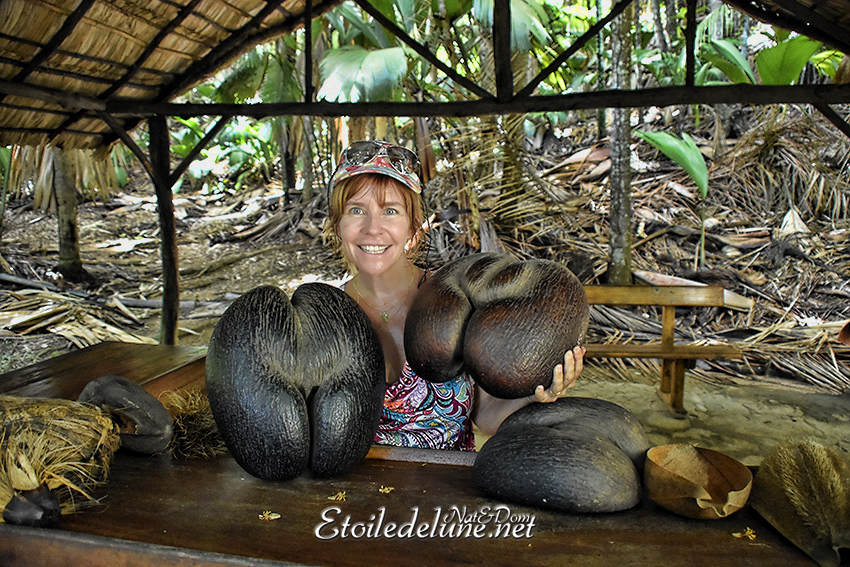
It’s not just the paradise-like abundance that suggested Gordon’s theory. The Vallée de Mai is home to a particularly mysterious allusion to the birth of man and woman: the coco de mer, a rare type of palm tree known for its suggestive “male” and “female” seeds that bear an uncanny resemblance to human reproductive body parts. The seeds – the largest and heaviest in the plant kingdom – are even adult-sized, reaching weights of up to 30kg.

As the climate of the Seychelles became warmer and wetter the vegetation on the islands became taller and more dense. These conditions encouraged the growth of tropical rainforests. [3]
Painting by Marianne North - Palms in Mahe Seychelles
Picture posted by Royal Botanical Gardens,Kew
https://blogger.googleusercontent.com/img/b/R29vZ2xl/AVvXsEg3-9KcYFlPZI9U_tQOCBRwEdal-SYhjcFAOQTjGUv4xkQutKHXo7r19rkzOKrPGXV2-ROISd0I16gBBEQpL0jRNp88pIuM4f7Tvi5q5setCVgKfdlXloE_jAj5TTn9ghcVelE7KG2kJL1x/s1600/Palms-in-Mahe-Seychelles.jpg
http://www.newtonsapple.org.uk/wp-content/uploads/2014/09/Palms-in-Mahe-Seychelles.jpg
http://www.newtonsapple.org.uk/coco-de-mer-palm-tree/
It’s not just the paradise-like abundance that suggested Gordon’s theory. The Vallée de Mai is home to a particularly mysterious allusion to the birth of man and woman: the coco de mer, a rare type of palm tree known for its suggestive “male” and “female” seeds that bear an uncanny resemblance to human reproductive body parts. The seeds – the largest and heaviest in the plant kingdom – are even adult-sized, reaching weights of up to 30kg.
PHOTO: The rare coco de mer, which alludes (suggests) to the birth of man and woman, only grows in the Seychelles islands
Credit: Michele Falzone/Alamy
https://blogger.googleusercontent.com/img/b/R29vZ2xl/AVvXsEhgsnN1Xhpp5Tv2Py3QJCSiFxPQypCpYt-pmux9wZp2p8FGB2kcFZWPOe4Xb7kyaFh_rGoIUBnpBhMn24HWZb3HtHhGDk6JvisgpYQGWjjpHHjoN4w0ZU6cCgM7cwrbgSCZQoUiUyBm-XNQ/s1600/p04j8jst.jpg
http://ichef.bbci.co.uk/wwfeatures/wm/live/1280_720/images/live/p0/4j/8j/p04j8jst.jpg
http://www.bbc.com/travel/story/20161128-the-real-life-garden-of-eden?ocid=AsiaOne

Credit: Michele Falzone/Alamy
https://blogger.googleusercontent.com/img/b/R29vZ2xl/AVvXsEhgsnN1Xhpp5Tv2Py3QJCSiFxPQypCpYt-pmux9wZp2p8FGB2kcFZWPOe4Xb7kyaFh_rGoIUBnpBhMn24HWZb3HtHhGDk6JvisgpYQGWjjpHHjoN4w0ZU6cCgM7cwrbgSCZQoUiUyBm-XNQ/s1600/p04j8jst.jpg
http://ichef.bbci.co.uk/wwfeatures/wm/live/1280_720/images/live/p0/4j/8j/p04j8jst.jpg
http://www.bbc.com/travel/story/20161128-the-real-life-garden-of-eden?ocid=AsiaOne
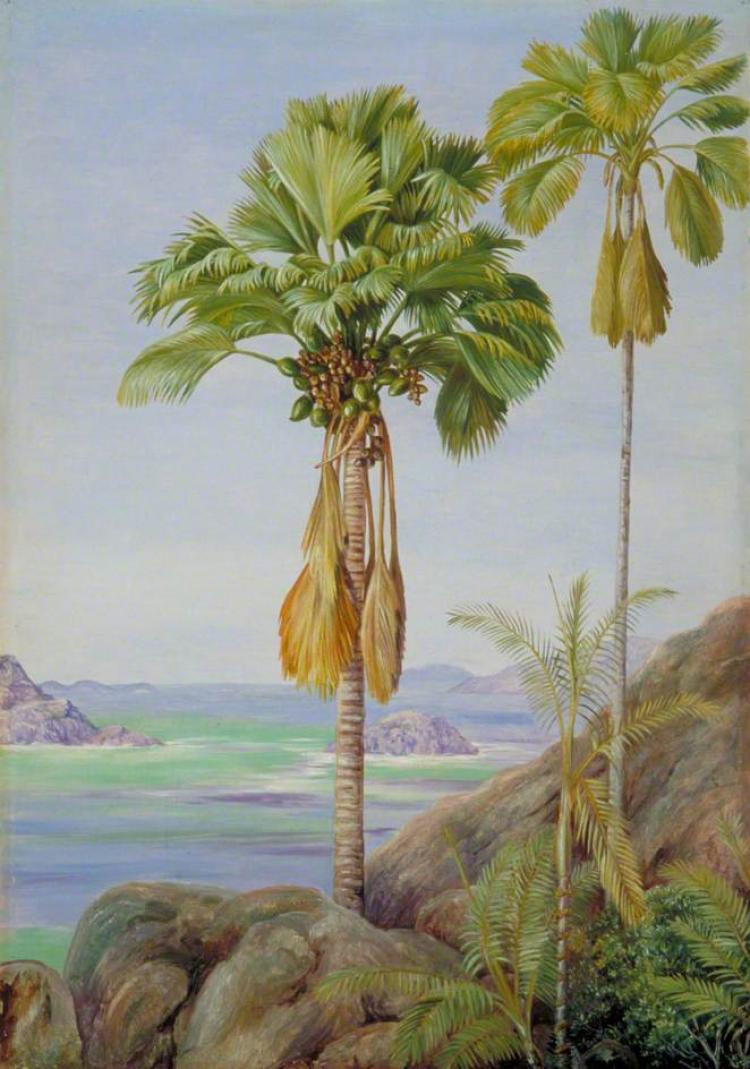
PHOTO: Male and Female Trees of the Coco de Mer in Praslin (1883)
Painting by Marianne North
Picture posted by Foma-Fomitch on 19 August 2013 at 18:00
https://blogger.googleusercontent.com/img/b/R29vZ2xl/AVvXsEiUbDhpE1R5IUAG8hqhlXdBOLYesU-teyeDcI-iGYsHnn_n8zMk8qoZ-I-koW2R52QScLd0VIrKynGCEisxf4aILDGp6CghSlSyNxPPL-7NMPIm394OuQxEbrDmFGmaTf_Np1g_caFX9vJr/s1600/388664.jpg
http://classic-online.ru/uploads/000_picture/388700/388664.jpg
http://classic-online.ru/ru/art/picture/North/128915
The coco de mer has spawned so many legends that the tree is fabled and revered in lands far beyond the Seychelles. When these oversized, suggestively shaped seeds washed up on the shores of the Arabian Peninsula hundreds of years ago, they quickly gathered a mythical momentum. They were seen as symbols and gifts of fertility; rumours swirled about their powerful aphrodisiac qualities. It was widely assumed the large seeds were coconuts that had floated away from undersea palm trees; Middle Eastern princes offered a fortune for these rare treasures, and people took to the treacherous oceans, searching erroneously for the underwater palm tree.
The mystery was finally solved in 1768 when French explorer Marion du Fresne discovered Coco de Mer nuts growing on dry land. He found them growing inside fruits ….… of a previously unknown species of palm tree. This new species of palm (named the ‘Coco de Mer’) grew in isolated valleys on Praslin Island in the Seychelles. The trees towered above all other vegetation. [3]

Painting by Marianne North
Picture posted by Foma-Fomitch on 19 August 2013 at 18:00
https://blogger.googleusercontent.com/img/b/R29vZ2xl/AVvXsEiUbDhpE1R5IUAG8hqhlXdBOLYesU-teyeDcI-iGYsHnn_n8zMk8qoZ-I-koW2R52QScLd0VIrKynGCEisxf4aILDGp6CghSlSyNxPPL-7NMPIm394OuQxEbrDmFGmaTf_Np1g_caFX9vJr/s1600/388664.jpg
http://classic-online.ru/uploads/000_picture/388700/388664.jpg
http://classic-online.ru/ru/art/picture/North/128915
The coco de mer has spawned so many legends that the tree is fabled and revered in lands far beyond the Seychelles. When these oversized, suggestively shaped seeds washed up on the shores of the Arabian Peninsula hundreds of years ago, they quickly gathered a mythical momentum. They were seen as symbols and gifts of fertility; rumours swirled about their powerful aphrodisiac qualities. It was widely assumed the large seeds were coconuts that had floated away from undersea palm trees; Middle Eastern princes offered a fortune for these rare treasures, and people took to the treacherous oceans, searching erroneously for the underwater palm tree.
The mystery was finally solved in 1768 when French explorer Marion du Fresne discovered Coco de Mer nuts growing on dry land. He found them growing inside fruits ….… of a previously unknown species of palm tree. This new species of palm (named the ‘Coco de Mer’) grew in isolated valleys on Praslin Island in the Seychelles. The trees towered above all other vegetation. [3]
PHOTO: The “female” seeds resemble the human reproductive body parts. The seed is one of the largest and heaviest in the plant kingdom that weighs up to 30kg.
Picture posted by Nat & Dom on 1 August 2016
https://blogger.googleusercontent.com/img/b/R29vZ2xl/AVvXsEg2_Z3k6YaSb96JDo0HkmvE3dKc5f_9QUD7a2ReNy5VPTnIOhkJfKM7myGW7cMWRBrnHx8Q_CbvDtB6Um_7KGKgbQ1cEtdsAl_1P-SeZ6hGY_f4C89CZrBNDqCqo-_pLXWAMI7OXp3A295f/s1600/Vallee+de+Mai_++Coco+de+mer_+%2528coco_fesse%2529+Seychelles++%252813%2529.jpg
http://voyage.nat-et-dom.fr/wp-content/archives/3295/Vallee%20de%20Mai_%20%20Coco%20de%20mer_%20(coco_fesse)%20Seychelles%20%20(13).jpg
http://voyage.nat-et-dom.fr/2016/08/01/20457

Picture posted by Nat & Dom on 1 August 2016
https://blogger.googleusercontent.com/img/b/R29vZ2xl/AVvXsEg2_Z3k6YaSb96JDo0HkmvE3dKc5f_9QUD7a2ReNy5VPTnIOhkJfKM7myGW7cMWRBrnHx8Q_CbvDtB6Um_7KGKgbQ1cEtdsAl_1P-SeZ6hGY_f4C89CZrBNDqCqo-_pLXWAMI7OXp3A295f/s1600/Vallee+de+Mai_++Coco+de+mer_+%2528coco_fesse%2529+Seychelles++%252813%2529.jpg
http://voyage.nat-et-dom.fr/wp-content/archives/3295/Vallee%20de%20Mai_%20%20Coco%20de%20mer_%20(coco_fesse)%20Seychelles%20%20(13).jpg
http://voyage.nat-et-dom.fr/2016/08/01/20457
PHOTO: The seeds were seen as symbols and gifts of fertility; with powerful aphrodisiac qualities.
Picture posted in Instagram
https://blogger.googleusercontent.com/img/b/R29vZ2xl/AVvXsEivUggUWVEa58hjLRV65GPnwgQpBdW2whKxf0A1d4RTcqDcVEe8ISxaoKzYoIhZruyaTfcktJXkDOKUNhhfAHcdu9Us_Xo4KxMdcw5tFxQJGiEg9bVx3BITGr26KaVUcAio8lXIUNMogDYX/s1600/13126655_231869480515035_1164120923_n.jpg
http://scontent.cdninstagram.com/t51.2885-15/s480x480/e35/13126655_231869480515035_1164120923_n.jpg?ig_cache_key=MTI0NDM2NzE3OTM5NzQxNTgxNg%3D%3D.2
http://www.imgrum.net/tag/cocofesse

Picture posted in Instagram
https://blogger.googleusercontent.com/img/b/R29vZ2xl/AVvXsEivUggUWVEa58hjLRV65GPnwgQpBdW2whKxf0A1d4RTcqDcVEe8ISxaoKzYoIhZruyaTfcktJXkDOKUNhhfAHcdu9Us_Xo4KxMdcw5tFxQJGiEg9bVx3BITGr26KaVUcAio8lXIUNMogDYX/s1600/13126655_231869480515035_1164120923_n.jpg
http://scontent.cdninstagram.com/t51.2885-15/s480x480/e35/13126655_231869480515035_1164120923_n.jpg?ig_cache_key=MTI0NDM2NzE3OTM5NzQxNTgxNg%3D%3D.2
http://www.imgrum.net/tag/cocofesse
PHOTO: Coco de Mer is also the name of a British firm that makes sexy lingerie
When these oversized, suggestively shaped seeds washed up on the shores of the Arabian Peninsula hundreds of years ago, they quickly gathered a mythical momentum. Many fashion business spring into action.
Picture posted by Harry on 27 May 2015 - X
https://blogger.googleusercontent.com/img/b/R29vZ2xl/AVvXsEhCFqK1s_mcR0xBMQpTYFSh9r5inCfIeF53TKZnL9vPMjZmPkr0AummJv46PHLBQoXzz-Bdqt_J76nnLcuqJANg3Y6dAGjrZquiRWr1tWvggupbxDyVoz3u_-_2m_e7ru6rQDGomeGt92nH/s1600/coco-de-mer-0.jpg
https://mainstreamspanking.files.wordpress.com/2015/05/coco-de-mer-0.jpg
https://mainstreamspanking.wordpress.com/2015/05/27/x/
The sensitive tree is endemic to Praslin and the neighbouring island of Curieuse, but it truly thrives in the Vallee de Mai. It takes three months for a seed to germinate, and it must remain exactly where it fell, untouched, in order to grow. Legends of the coco de mer spread far and wide, but the truth was even stranger than fiction. Thanks to the trees’ staggered growth patterns, where palms growing the large “male” seeds exist next to ones that bear only “female” seeds, imaginations ran wild – particularly on windy nights, when the male and female parts intertwined.

When these oversized, suggestively shaped seeds washed up on the shores of the Arabian Peninsula hundreds of years ago, they quickly gathered a mythical momentum. Many fashion business spring into action.
Picture posted by Harry on 27 May 2015 - X
https://blogger.googleusercontent.com/img/b/R29vZ2xl/AVvXsEhCFqK1s_mcR0xBMQpTYFSh9r5inCfIeF53TKZnL9vPMjZmPkr0AummJv46PHLBQoXzz-Bdqt_J76nnLcuqJANg3Y6dAGjrZquiRWr1tWvggupbxDyVoz3u_-_2m_e7ru6rQDGomeGt92nH/s1600/coco-de-mer-0.jpg
https://mainstreamspanking.files.wordpress.com/2015/05/coco-de-mer-0.jpg
https://mainstreamspanking.wordpress.com/2015/05/27/x/
The sensitive tree is endemic to Praslin and the neighbouring island of Curieuse, but it truly thrives in the Vallee de Mai. It takes three months for a seed to germinate, and it must remain exactly where it fell, untouched, in order to grow. Legends of the coco de mer spread far and wide, but the truth was even stranger than fiction. Thanks to the trees’ staggered growth patterns, where palms growing the large “male” seeds exist next to ones that bear only “female” seeds, imaginations ran wild – particularly on windy nights, when the male and female parts intertwined.
PHOTO: The flower of the Coco de Mer, Valle de Mai, Praslin, Seychelles.
The large “male” seeds. When God created Adam and Eve he probably used the Coco de Mer palm tree on the island of Praslin as a template. The palms coconut is the world's largest and shaped like a woman's abdomen and the trees male flowers resemble the man's private parts. When sailors in the 1700s discovered the erotic nuts after months at sea, it is said that they went completely bananas. [2]
Picture posted by Marcus Karlsen Photography
https://blogger.googleusercontent.com/img/b/R29vZ2xl/AVvXsEju5kWwjdkmo2T6dBzicDFN3x3EIrEhTHZ9u0WYsmjJjXEtNrVQh-NfP52bg3Um0FxmcxwFTTwD6NVc4fT7YoXpiSD9VThg7FlSFqV_5UxUo2ZVHHGPZXF0bXHTnjM8UaSt089lX3tkbOAJ/s1600/PICT9008_Coco_de_mer_blomst.jpg
http://www.marcuskarlsen.com/images/seychelles/PICT9008_Coco_de_mer_blomst.jpg
http://www.marcuskarlsen.com/travel/seychelles.html
In its 40 years of independence, the Seychelles has gone to great lengths to protect its Garden of Eden, one of the world’s smallest Unesco World Heritage sites.
The coco de mer is the symbol of the Seychelles; park rangers guard the protected land proudly and fiercely, and the seeds are strictly regulated. Both tourists and locals need a permit to buy the coco de mer seed, and only certain rangers are allowed to collect a limited number from the Vallée de Mai area. Anyone else caught taking one faces five years of jail time.

The large “male” seeds. When God created Adam and Eve he probably used the Coco de Mer palm tree on the island of Praslin as a template. The palms coconut is the world's largest and shaped like a woman's abdomen and the trees male flowers resemble the man's private parts. When sailors in the 1700s discovered the erotic nuts after months at sea, it is said that they went completely bananas. [2]
Picture posted by Marcus Karlsen Photography
https://blogger.googleusercontent.com/img/b/R29vZ2xl/AVvXsEju5kWwjdkmo2T6dBzicDFN3x3EIrEhTHZ9u0WYsmjJjXEtNrVQh-NfP52bg3Um0FxmcxwFTTwD6NVc4fT7YoXpiSD9VThg7FlSFqV_5UxUo2ZVHHGPZXF0bXHTnjM8UaSt089lX3tkbOAJ/s1600/PICT9008_Coco_de_mer_blomst.jpg
http://www.marcuskarlsen.com/images/seychelles/PICT9008_Coco_de_mer_blomst.jpg
http://www.marcuskarlsen.com/travel/seychelles.html
In its 40 years of independence, the Seychelles has gone to great lengths to protect its Garden of Eden, one of the world’s smallest Unesco World Heritage sites.
The coco de mer is the symbol of the Seychelles; park rangers guard the protected land proudly and fiercely, and the seeds are strictly regulated. Both tourists and locals need a permit to buy the coco de mer seed, and only certain rangers are allowed to collect a limited number from the Vallée de Mai area. Anyone else caught taking one faces five years of jail time.
PHOTO: Geiko on the male organ of a "coco de mer", valley of Mai, in Praslin
Picture posted by Pom' Angers, Panoramio on 27 February 2008
https://blogger.googleusercontent.com/img/b/R29vZ2xl/AVvXsEh0S555k8CaHGJr6fUpJHcunYLH3TFdP4xloPrBgBlH2dLr3SvwQBq6SlbiQyNuHMiDtcYibBVleg3Hs0K7U73azXbmLndvJYhImyN8h0D9QRxNynXI0udYcvA2-fFTB2OZVZ7r58rSAm26/s1600/8144319.jpg
http://static.panoramio.com/photos/large/8144319.jpg
http://www.panoramio.com/photo/8144319

Picture posted by Pom' Angers, Panoramio on 27 February 2008
https://blogger.googleusercontent.com/img/b/R29vZ2xl/AVvXsEh0S555k8CaHGJr6fUpJHcunYLH3TFdP4xloPrBgBlH2dLr3SvwQBq6SlbiQyNuHMiDtcYibBVleg3Hs0K7U73azXbmLndvJYhImyN8h0D9QRxNynXI0udYcvA2-fFTB2OZVZ7r58rSAm26/s1600/8144319.jpg
http://static.panoramio.com/photos/large/8144319.jpg
http://www.panoramio.com/photo/8144319
PHOTO: The highly endangered black parrot builds its nest in the coco de mer tree
Credit: blickwinkel/Alamy
https://blogger.googleusercontent.com/img/b/R29vZ2xl/AVvXsEiaVrLisEZW3osLTB-0dAxo9AVXXbdCqEX9QJ8wRXUyYH3ar6GMDCzeVrNwfrowkzeyd5coQ-Iy5Y9vXy9G4_27hE56MCUxv0Immb8q-GsHmPtHEkUfsqWng_i0-jcOmoCJNap0TiKmjzxn/s1600/p04j8kd5.jpg
http://ichef.bbci.co.uk/wwfeatures/wm/live/624_351/images/live/p0/4j/8k/p04j8kd5.jpg
http://www.bbc.com/travel/story/20161128-the-real-life-garden-of-eden?ocid=AsiaOne
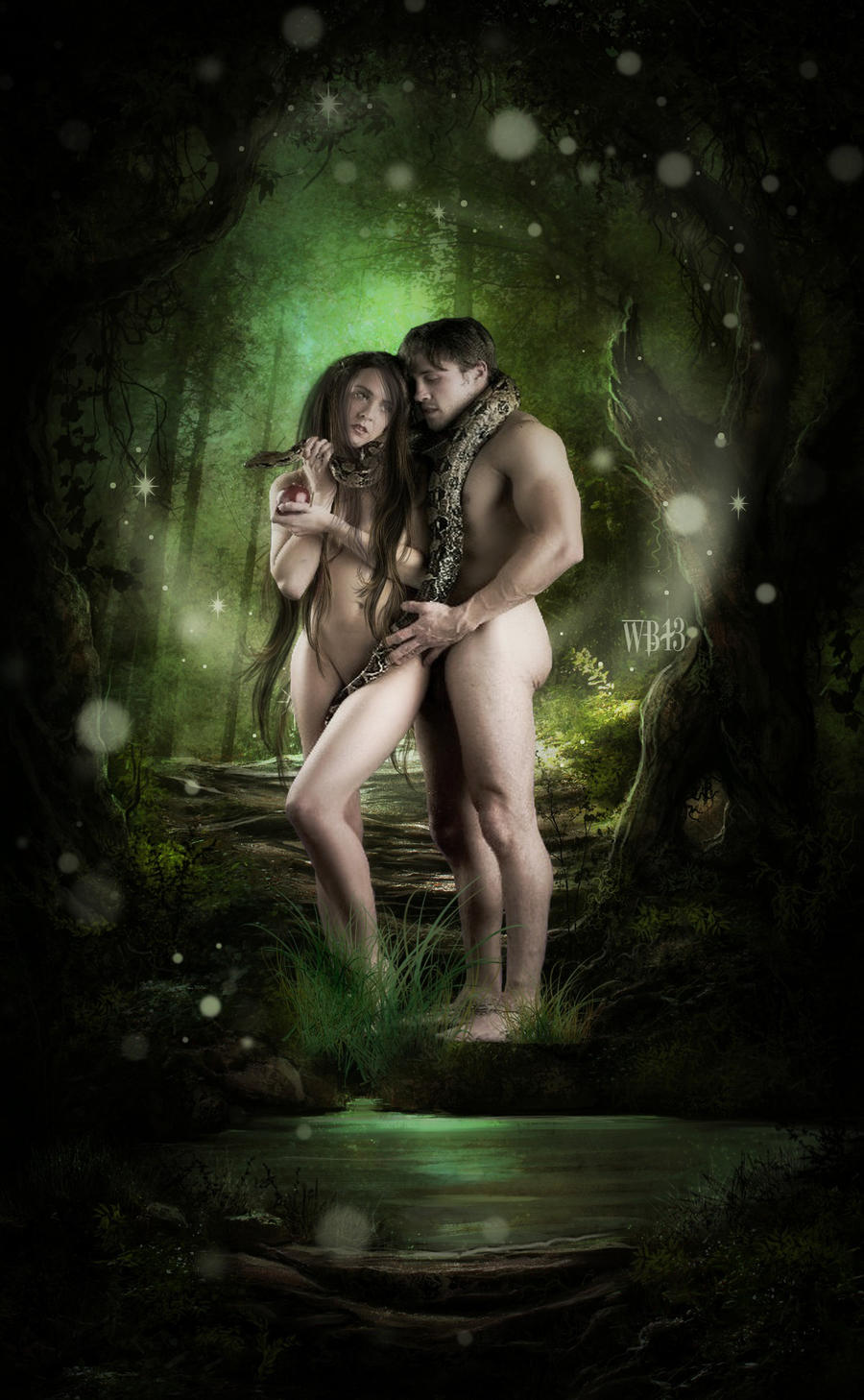
The valley is home to a variety of small creatures, all with uncanny abilities to hide in plain sight. There are geckos, oversized slugs, tree frogs, chameleons, insects, and of course, the Garden of Eden’s famous snakes. Then there is the forest’s famous and rare black parrot, which builds its nest in the bowl of the coco de mer tree. The lives of these birds and the survival of the coco de mer are intertwined: the parrots pollinate the trees, and the trees are the only place the parrots will nest.

Credit: blickwinkel/Alamy
https://blogger.googleusercontent.com/img/b/R29vZ2xl/AVvXsEiaVrLisEZW3osLTB-0dAxo9AVXXbdCqEX9QJ8wRXUyYH3ar6GMDCzeVrNwfrowkzeyd5coQ-Iy5Y9vXy9G4_27hE56MCUxv0Immb8q-GsHmPtHEkUfsqWng_i0-jcOmoCJNap0TiKmjzxn/s1600/p04j8kd5.jpg
http://ichef.bbci.co.uk/wwfeatures/wm/live/624_351/images/live/p0/4j/8k/p04j8kd5.jpg
http://www.bbc.com/travel/story/20161128-the-real-life-garden-of-eden?ocid=AsiaOne
The valley is home to a variety of small creatures, all with uncanny abilities to hide in plain sight. There are geckos, oversized slugs, tree frogs, chameleons, insects, and of course, the Garden of Eden’s famous snakes. Then there is the forest’s famous and rare black parrot, which builds its nest in the bowl of the coco de mer tree. The lives of these birds and the survival of the coco de mer are intertwined: the parrots pollinate the trees, and the trees are the only place the parrots will nest.
PHOTO: The Garden of Eden’s famous Eve and the Snake
Photo Editorial From Coco De Mer
https://blogger.googleusercontent.com/img/b/R29vZ2xl/AVvXsEiwuyOSYXoxs2-JEKvI7K3yd2DSqHzKqpPAj9YLbNjvUCdPsIo_0DNKBfw_2o_o0l64zTVcdOprXanBlP814bXpoXZKJYZajpzu4jI-qn9xLjqtIocpp8PNGslc2j0t1s3uKPHEPJtzIYgh/s1600/photoeditorial_1.jpg
https://frillfinder.files.wordpress.com/2010/08/photoeditorial_1.jpg
https://frillfinder.wordpress.com/2010/08/12/shop-appeal-coco-de-mer-covent-garden/
The islands of the Seychelles are home to many mysteries. Only 12 of the archipelago’s 115 islands are inhabited. Praslin is one; like the other islands, its granite base is ringed with some of the world’s most beautiful white-sand beaches guarded by the towering boulders found everywhere across the Seychelles. Here, in the small Vallée de Mai, it’s hard to remember that the rest of the world exists only a few kilometres away.

Photo Editorial From Coco De Mer
https://blogger.googleusercontent.com/img/b/R29vZ2xl/AVvXsEiwuyOSYXoxs2-JEKvI7K3yd2DSqHzKqpPAj9YLbNjvUCdPsIo_0DNKBfw_2o_o0l64zTVcdOprXanBlP814bXpoXZKJYZajpzu4jI-qn9xLjqtIocpp8PNGslc2j0t1s3uKPHEPJtzIYgh/s1600/photoeditorial_1.jpg
https://frillfinder.files.wordpress.com/2010/08/photoeditorial_1.jpg
https://frillfinder.wordpress.com/2010/08/12/shop-appeal-coco-de-mer-covent-garden/
The islands of the Seychelles are home to many mysteries. Only 12 of the archipelago’s 115 islands are inhabited. Praslin is one; like the other islands, its granite base is ringed with some of the world’s most beautiful white-sand beaches guarded by the towering boulders found everywhere across the Seychelles. Here, in the small Vallée de Mai, it’s hard to remember that the rest of the world exists only a few kilometres away.
PHOTO: The beautiful beach of Anse Lazio, Praslin, Seychelles.
If you have enough of the unique palm forests of Praslin, you can relax at Anse Lazio, the island's finest beach. When the German travel magazine Reise & Priese's readers named the 12 most beautiful beaches in the world, six of them were located in the Seychelles. Anse Lazio was named the most beautiful - and we know very well why. The coral sand you find here is fine grained and white and the water azure blue. When the rays of the sun shine through the water it is easy to detect the shadows of fish and sea turtles in the crystal clear waters. This mile-long beach is the island's most touristy, but still it is a long way to the neighbours towel. Only a handful of tourists find their way here on a busy day. [2]
Picture posted by Marcus Karlsen Photography
https://blogger.googleusercontent.com/img/b/R29vZ2xl/AVvXsEjLXNG0qTw3hzI0ge3laPT8eQl4j3aLeCwuSZGVNAeOYSr3hTeYXqZazaL1dB8CzeLLssjPWFzoege5uI1Bls5CeBr7i6YTKPim9OSUynmlcKaOlLqG4q8wp_86Wat9Gc1FLpAJOJ1wjFl1/s1600/PICT7789.jpg
http://www.marcuskarlsen.com/images/seychelles/PICT7789.jpg
http://www.marcuskarlsen.com/travel/seychelles.html
For centuries, scholars have debated the original site of the Garden of Eden. Walking through the Vallée de Mai, with its larger-than-life nature and rare peculiarities, it’s easy to see why in this part of the world, there is little doubt.

If you have enough of the unique palm forests of Praslin, you can relax at Anse Lazio, the island's finest beach. When the German travel magazine Reise & Priese's readers named the 12 most beautiful beaches in the world, six of them were located in the Seychelles. Anse Lazio was named the most beautiful - and we know very well why. The coral sand you find here is fine grained and white and the water azure blue. When the rays of the sun shine through the water it is easy to detect the shadows of fish and sea turtles in the crystal clear waters. This mile-long beach is the island's most touristy, but still it is a long way to the neighbours towel. Only a handful of tourists find their way here on a busy day. [2]
Picture posted by Marcus Karlsen Photography
https://blogger.googleusercontent.com/img/b/R29vZ2xl/AVvXsEjLXNG0qTw3hzI0ge3laPT8eQl4j3aLeCwuSZGVNAeOYSr3hTeYXqZazaL1dB8CzeLLssjPWFzoege5uI1Bls5CeBr7i6YTKPim9OSUynmlcKaOlLqG4q8wp_86Wat9Gc1FLpAJOJ1wjFl1/s1600/PICT7789.jpg
http://www.marcuskarlsen.com/images/seychelles/PICT7789.jpg
http://www.marcuskarlsen.com/travel/seychelles.html
For centuries, scholars have debated the original site of the Garden of Eden. Walking through the Vallée de Mai, with its larger-than-life nature and rare peculiarities, it’s easy to see why in this part of the world, there is little doubt.
PHOTO: With its incredible nature and rarities, it’s easy to see how this could be the Garden of Eden
Credit: imageBROKER/Alamy
https://blogger.googleusercontent.com/img/b/R29vZ2xl/AVvXsEjKwtTMsBklQiegBLKKgWSWhtOgIIBaojtZK-QpI7WdjoH0y7CSenTvq7np8W_dmpNip4hrD9q3zjd8MtJ9_tM6zyINye7GdSzDGc_ULw8Lvw3SLpTMZ22V5gH6MPObRpLGD_OAl7hO3i8G/s1600/p04j8k0y.jpg
http://ichef.bbci.co.uk/wwfeatures/wm/live/624_351/images/live/p0/4j/8k/p04j8k0y.jpg
http://www.bbc.com/travel/story/20161128-the-real-life-garden-of-eden?ocid=AsiaOne
Reference
Credit: imageBROKER/Alamy
https://blogger.googleusercontent.com/img/b/R29vZ2xl/AVvXsEjKwtTMsBklQiegBLKKgWSWhtOgIIBaojtZK-QpI7WdjoH0y7CSenTvq7np8W_dmpNip4hrD9q3zjd8MtJ9_tM6zyINye7GdSzDGc_ULw8Lvw3SLpTMZ22V5gH6MPObRpLGD_OAl7hO3i8G/s1600/p04j8k0y.jpg
http://ichef.bbci.co.uk/wwfeatures/wm/live/624_351/images/live/p0/4j/8k/p04j8k0y.jpg
http://www.bbc.com/travel/story/20161128-the-real-life-garden-of-eden?ocid=AsiaOne
By Hillary Richard, BBC, 5 December 2016
If you liked this story, sign up for the weekly bbc.com features newsletter, called “If You Only Read 6 Things This Week”, http://pages.emails.bbc.com/subscribe/?ocid=tvl.bbc.email.we.email-signup.
A handpicked selection of stories from BBC Future, Earth, Culture, Capital, Travel and Autos, delivered to your inbox every Friday.
If you liked this story, sign up for the weekly bbc.com features newsletter, called “If You Only Read 6 Things This Week”, http://pages.emails.bbc.com/subscribe/?ocid=tvl.bbc.email.we.email-signup.
A handpicked selection of stories from BBC Future, Earth, Culture, Capital, Travel and Autos, delivered to your inbox every Friday.
Reference
[1] Hillary Richard, posted on 5 December 2016, The real-life garden of Eden?, http://www.bbc.com/travel/story/20161128-the-real-life-garden-of-eden?ocid=AsiaOne
[2] Marcus Karlsen travel & nature photography, SEYCHELLES – Tortoises, pirates and erotic nuts in the lost continent, http://www.marcuskarlsen.com/travel/seychelles.html
[3] Science for all, written by a teacher working in British schools. Science topics reflect author's own nterests. Coco de Mer Palm Tree, http://www.newtonsapple.org.uk/coco-de-mer-palm-tree/
[2] Marcus Karlsen travel & nature photography, SEYCHELLES – Tortoises, pirates and erotic nuts in the lost continent, http://www.marcuskarlsen.com/travel/seychelles.html
[3] Science for all, written by a teacher working in British schools. Science topics reflect author's own nterests. Coco de Mer Palm Tree, http://www.newtonsapple.org.uk/coco-de-mer-palm-tree/
- https://blogger.googleusercontent.com/img/b/R29vZ2xl/AVvXsEjM1by8WnjmyHzZy6MKFVKXEEsb-G168Lk0GsX5M_shrfUESYnkP6vG6BUosmFk4XcDUGXkSAqoD2LQIy7qmXJ9GBJdECrxFiAa5FfWaW5DUodScYhgdu-SSeQrAJJhG7srcZVv1h8PpfBG/s1600/Coco-de-Mer-Gorge-in-Praslin-Seychelles-painted-in-c1883.jpg
- http://www.newtonsapple.org.uk/wp-content/uploads/2014/08/Coco-de-Mer-Gorge-in-Praslin-Seychelles-painted-in-c1883.jpg
- http://www.keyword-suggestions.com/Y29jbyBkZSBtZXIgdHJlZQ/
- https://blogger.googleusercontent.com/img/b/R29vZ2xl/AVvXsEgonDcLswVG0GpMvcWoNjhUmp4RbctRcnoKXzGKav7xDv1dE4ImujbctlNIxeRRQWNRhXmwlEelYERfY2PGkhyphenhyphen4T285V0AC9yej8fvRLuMZVHueSI0VIsjlSSlTBlPAGLwD-iJHc4aXHmK9/s1600/Seychelles-in-Eocene-period-1024x488.jpg
- http://www.newtonsapple.org.uk/wp-content/uploads/2014/09/Seychelles-in-Eocene-period-1024x488.jpg
- http://www.newtonsapple.org.uk/coco-de-mer-palm-tree/
- https://blogger.googleusercontent.com/img/b/R29vZ2xl/AVvXsEgk_qncDHQv80oazFU7mKy4ZoiH_mtZBE_eO1RN-Pfms_k3IYgakO5Km3pD0pSEbmDmqcKAMcYIb8o-u_6P7YOxHMvys3u9Tnlg2drzfKz4KVFP5EIlASZ8yEGUAoIrC5n5znC4ajFXcY_e/s1600/p04j8klb.jpg
- http://ichef.bbci.co.uk/wwfeatures/wm/live/624_351/images/live/p0/4j/8k/p04j8klb.jpg
- http://www.bbc.com/travel/story/20161128-the-real-life-garden-of-eden?ocid=AsiaOne
- https://blogger.googleusercontent.com/img/b/R29vZ2xl/AVvXsEhiuSNkW59AfPnsCMhilaPepbXArX3eGgo7e4VPH_Bsy5l9IEcIv7qX9JKKKs_O0-6Zgu5zMTmQIfvijcAu4MlipwPipqXOuMh5MEJGGIbxn6L0Tkohufw8-bD_U25Jv07tcZJIVzz_mvH-/s1600/479.jpg
- http://www.kew.org/mng/gallery/img_large/479.jpg
- http://www.kew.org/mng/gallery/479.html
- https://blogger.googleusercontent.com/img/b/R29vZ2xl/AVvXsEg3-9KcYFlPZI9U_tQOCBRwEdal-SYhjcFAOQTjGUv4xkQutKHXo7r19rkzOKrPGXV2-ROISd0I16gBBEQpL0jRNp88pIuM4f7Tvi5q5setCVgKfdlXloE_jAj5TTn9ghcVelE7KG2kJL1x/s1600/Palms-in-Mahe-Seychelles.jpg
- http://www.newtonsapple.org.uk/wp-content/uploads/2014/09/Palms-in-Mahe-Seychelles.jpg
- http://www.newtonsapple.org.uk/coco-de-mer-palm-tree/
- https://blogger.googleusercontent.com/img/b/R29vZ2xl/AVvXsEhgsnN1Xhpp5Tv2Py3QJCSiFxPQypCpYt-pmux9wZp2p8FGB2kcFZWPOe4Xb7kyaFh_rGoIUBnpBhMn24HWZb3HtHhGDk6JvisgpYQGWjjpHHjoN4w0ZU6cCgM7cwrbgSCZQoUiUyBm-XNQ/s1600/p04j8jst.jpg
- http://ichef.bbci.co.uk/wwfeatures/wm/live/1280_720/images/live/p0/4j/8j/p04j8jst.jpg
- http://www.bbc.com/travel/story/20161128-the-real-life-garden-of-eden?ocid=AsiaOne
- https://blogger.googleusercontent.com/img/b/R29vZ2xl/AVvXsEiUbDhpE1R5IUAG8hqhlXdBOLYesU-teyeDcI-iGYsHnn_n8zMk8qoZ-I-koW2R52QScLd0VIrKynGCEisxf4aILDGp6CghSlSyNxPPL-7NMPIm394OuQxEbrDmFGmaTf_Np1g_caFX9vJr/s1600/388664.jpg
- http://classic-online.ru/uploads/000_picture/388700/388664.jpg
- http://classic-online.ru/ru/art/picture/North/128915
- https://blogger.googleusercontent.com/img/b/R29vZ2xl/AVvXsEg2_Z3k6YaSb96JDo0HkmvE3dKc5f_9QUD7a2ReNy5VPTnIOhkJfKM7myGW7cMWRBrnHx8Q_CbvDtB6Um_7KGKgbQ1cEtdsAl_1P-SeZ6hGY_f4C89CZrBNDqCqo-_pLXWAMI7OXp3A295f/s1600/Vallee+de+Mai_++Coco+de+mer_+%2528coco_fesse%2529+Seychelles++%252813%2529.jpg
- http://voyage.nat-et-dom.fr/wp-content/archives/3295/Vallee%20de%20Mai_%20%20Coco%20de%20mer_%20(coco_fesse)%20Seychelles%20%20(13).jpg
- http://voyage.nat-et-dom.fr/2016/08/01/20457
- https://blogger.googleusercontent.com/img/b/R29vZ2xl/AVvXsEivUggUWVEa58hjLRV65GPnwgQpBdW2whKxf0A1d4RTcqDcVEe8ISxaoKzYoIhZruyaTfcktJXkDOKUNhhfAHcdu9Us_Xo4KxMdcw5tFxQJGiEg9bVx3BITGr26KaVUcAio8lXIUNMogDYX/s1600/13126655_231869480515035_1164120923_n.jpg
- http://scontent.cdninstagram.com/t51.2885-15/s480x480/e35/13126655_231869480515035_1164120923_n.jpg?ig_cache_key=MTI0NDM2NzE3OTM5NzQxNTgxNg%3D%3D.2
- http://www.imgrum.net/tag/cocofesse
- https://blogger.googleusercontent.com/img/b/R29vZ2xl/AVvXsEhCFqK1s_mcR0xBMQpTYFSh9r5inCfIeF53TKZnL9vPMjZmPkr0AummJv46PHLBQoXzz-Bdqt_J76nnLcuqJANg3Y6dAGjrZquiRWr1tWvggupbxDyVoz3u_-_2m_e7ru6rQDGomeGt92nH/s1600/coco-de-mer-0.jpg
- https://mainstreamspanking.files.wordpress.com/2015/05/coco-de-mer-0.jpg
- https://mainstreamspanking.wordpress.com/2015/05/27/x/
- https://blogger.googleusercontent.com/img/b/R29vZ2xl/AVvXsEju5kWwjdkmo2T6dBzicDFN3x3EIrEhTHZ9u0WYsmjJjXEtNrVQh-NfP52bg3Um0FxmcxwFTTwD6NVc4fT7YoXpiSD9VThg7FlSFqV_5UxUo2ZVHHGPZXF0bXHTnjM8UaSt089lX3tkbOAJ/s1600/PICT9008_Coco_de_mer_blomst.jpg
- http://www.marcuskarlsen.com/images/seychelles/PICT9008_Coco_de_mer_blomst.jpg
- http://www.marcuskarlsen.com/travel/seychelles.html
- https://blogger.googleusercontent.com/img/b/R29vZ2xl/AVvXsEh0S555k8CaHGJr6fUpJHcunYLH3TFdP4xloPrBgBlH2dLr3SvwQBq6SlbiQyNuHMiDtcYibBVleg3Hs0K7U73azXbmLndvJYhImyN8h0D9QRxNynXI0udYcvA2-fFTB2OZVZ7r58rSAm26/s1600/8144319.jpg
- http://static.panoramio.com/photos/large/8144319.jpg
- http://www.panoramio.com/photo/8144319
- https://blogger.googleusercontent.com/img/b/R29vZ2xl/AVvXsEiaVrLisEZW3osLTB-0dAxo9AVXXbdCqEX9QJ8wRXUyYH3ar6GMDCzeVrNwfrowkzeyd5coQ-Iy5Y9vXy9G4_27hE56MCUxv0Immb8q-GsHmPtHEkUfsqWng_i0-jcOmoCJNap0TiKmjzxn/s1600/p04j8kd5.jpg
- http://ichef.bbci.co.uk/wwfeatures/wm/live/624_351/images/live/p0/4j/8k/p04j8kd5.jpg
- http://www.bbc.com/travel/story/20161128-the-real-life-garden-of-eden?ocid=AsiaOne
- https://blogger.googleusercontent.com/img/b/R29vZ2xl/AVvXsEiwuyOSYXoxs2-JEKvI7K3yd2DSqHzKqpPAj9YLbNjvUCdPsIo_0DNKBfw_2o_o0l64zTVcdOprXanBlP814bXpoXZKJYZajpzu4jI-qn9xLjqtIocpp8PNGslc2j0t1s3uKPHEPJtzIYgh/s1600/photoeditorial_1.jpg
- https://frillfinder.files.wordpress.com/2010/08/photoeditorial_1.jpg
- https://frillfinder.wordpress.com/2010/08/12/shop-appeal-coco-de-mer-covent-garden/
- https://blogger.googleusercontent.com/img/b/R29vZ2xl/AVvXsEjLXNG0qTw3hzI0ge3laPT8eQl4j3aLeCwuSZGVNAeOYSr3hTeYXqZazaL1dB8CzeLLssjPWFzoege5uI1Bls5CeBr7i6YTKPim9OSUynmlcKaOlLqG4q8wp_86Wat9Gc1FLpAJOJ1wjFl1/s1600/PICT7789.jpg
- http://www.marcuskarlsen.com/images/seychelles/PICT7789.jpg
- http://www.marcuskarlsen.com/travel/seychelles.html
- https://blogger.googleusercontent.com/img/b/R29vZ2xl/AVvXsEjKwtTMsBklQiegBLKKgWSWhtOgIIBaojtZK-QpI7WdjoH0y7CSenTvq7np8W_dmpNip4hrD9q3zjd8MtJ9_tM6zyINye7GdSzDGc_ULw8Lvw3SLpTMZ22V5gH6MPObRpLGD_OAl7hO3i8G/s1600/p04j8k0y.jpg
- http://ichef.bbci.co.uk/wwfeatures/wm/live/624_351/images/live/p0/4j/8k/p04j8k0y.jpg
- http://www.bbc.com/travel/story/20161128-the-real-life-garden-of-eden?ocid=AsiaOne


 Posts
Posts










.jpg)
.gif)




%E5%BA%84%E5%B0%8F%E5%A9%B7+%28zhu%C4%81ng+xi%C7%8Eo+t%C3%ADng%29+-+%E5%A4%A9%E4%B8%8B%E6%88%91%E7%8B%AC%E9%86%89+%28ti%C4%81n+xi%C3%A0+w%C7%92+d%C3%BA+zu%C3%AC%29.jpg)


%20Seychelles%20%20(13).jpg)