Source Website: https://www.asiaone.com/lifestyle/your-gut-microbiome-defends-against-covid-19-so-keep-it-healthy
By Tara Loader Wilkinson, South China Morning Post, Asiaone, 07 March 2021 at 4:00 pm
By Tara Loader Wilkinson, South China Morning Post, Asiaone, 07 March 2021 at 4:00 pm

PHOTO: 70 per cent of our immune system is in or around the gut, according to South African celebrity doctor Frank Lipman, bestselling author of six books.
Picture from Facebook/digestivesystem123
Picture posted by Tara Loader Wilkinson, South China Morning Post, Asiaone on 07 March 2021 at 4:00 pm
https://blogger.googleusercontent.com/img/b/R29vZ2xl/AVvXsEhNBMtmUxcV1W2oV4-TRlPlmv2cfdTaOnW9FWFRksT0Ro-McOUrvi2iICG5i1EhPLjnJLXnqVkdNpcMVyys7EXXgYafgXWvxVPhNbZiRcRMPHMyfargHP8WT2AizIohMGE15EOOx9mGvDc/s800/20200301_digestive_fb.jpg
https://www.asiaone.com/sites/default/files/styles/article_main_image/public/original_images/Mar2021/20200301_digestive_fb.jpg?itok=KOAgSVhv
https://www.asiaone.com/lifestyle/your-gut-microbiome-defends-against-covid-19-so-keep-it-healthy
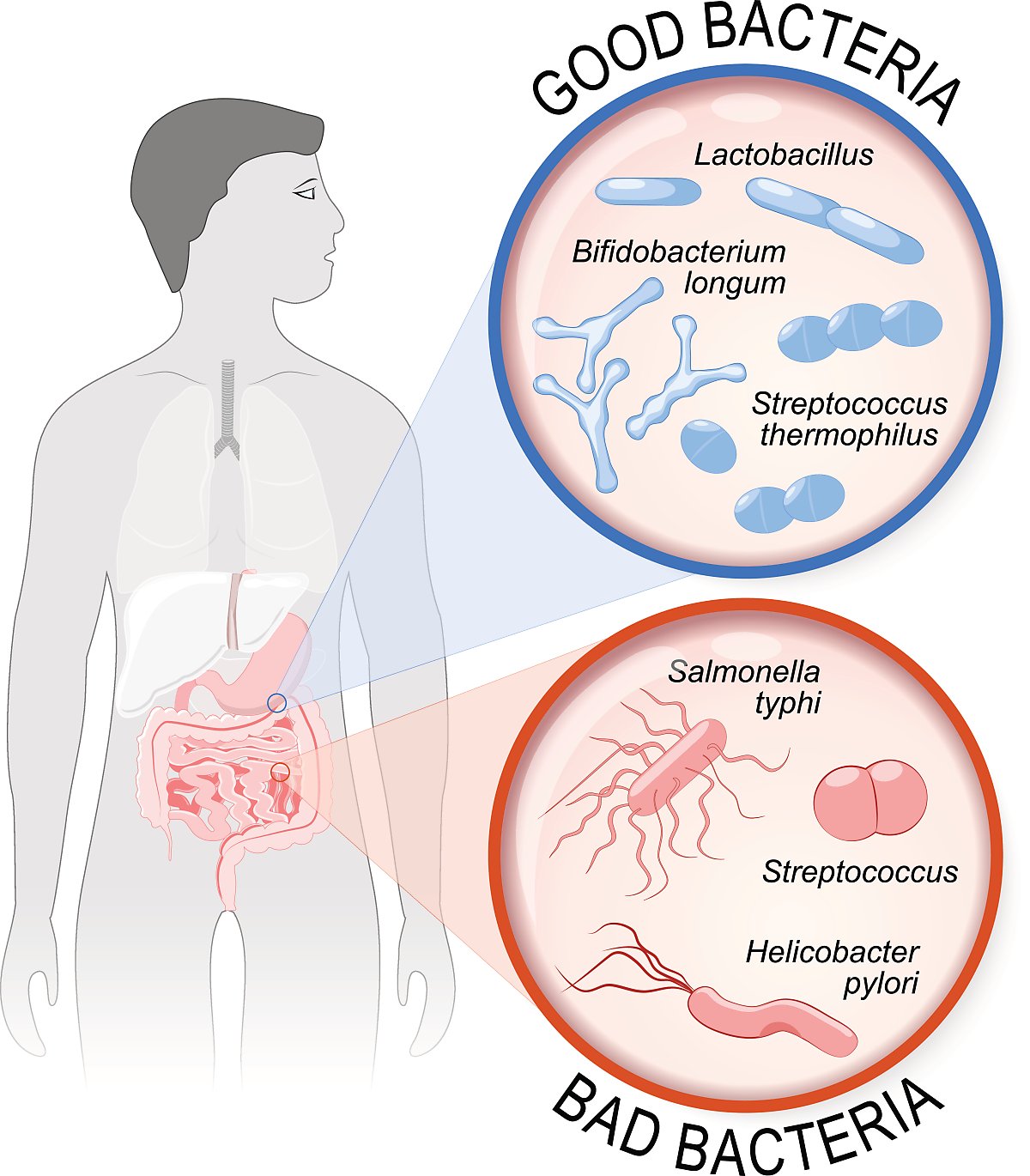
It’s a part of our body that most of us rarely think about, but our gut microbiome is absolutely critical to our well-being. The billions of bacteria that live in our intestines help convert our food into energy, protect against pathogens, educate our immune system and affect, directly or indirectly, our entire health.
In fact, 70 per cent of our immune system is in or around the gut, according to South African celebrity doctor Frank Lipman, bestselling author of six books, How To Be Well, The New Health Rules, 10 Reasons You Feel Old and Get Fat, Revive, Total Renewal and his latest, The New Rules of Aging Well.

Picture from Facebook/digestivesystem123
Picture posted by Tara Loader Wilkinson, South China Morning Post, Asiaone on 07 March 2021 at 4:00 pm
https://blogger.googleusercontent.com/img/b/R29vZ2xl/AVvXsEhNBMtmUxcV1W2oV4-TRlPlmv2cfdTaOnW9FWFRksT0Ro-McOUrvi2iICG5i1EhPLjnJLXnqVkdNpcMVyys7EXXgYafgXWvxVPhNbZiRcRMPHMyfargHP8WT2AizIohMGE15EOOx9mGvDc/s800/20200301_digestive_fb.jpg
https://www.asiaone.com/sites/default/files/styles/article_main_image/public/original_images/Mar2021/20200301_digestive_fb.jpg?itok=KOAgSVhv
https://www.asiaone.com/lifestyle/your-gut-microbiome-defends-against-covid-19-so-keep-it-healthy
It’s a part of our body that most of us rarely think about, but our gut microbiome is absolutely critical to our well-being. The billions of bacteria that live in our intestines help convert our food into energy, protect against pathogens, educate our immune system and affect, directly or indirectly, our entire health.
In fact, 70 per cent of our immune system is in or around the gut, according to South African celebrity doctor Frank Lipman, bestselling author of six books, How To Be Well, The New Health Rules, 10 Reasons You Feel Old and Get Fat, Revive, Total Renewal and his latest, The New Rules of Aging Well.
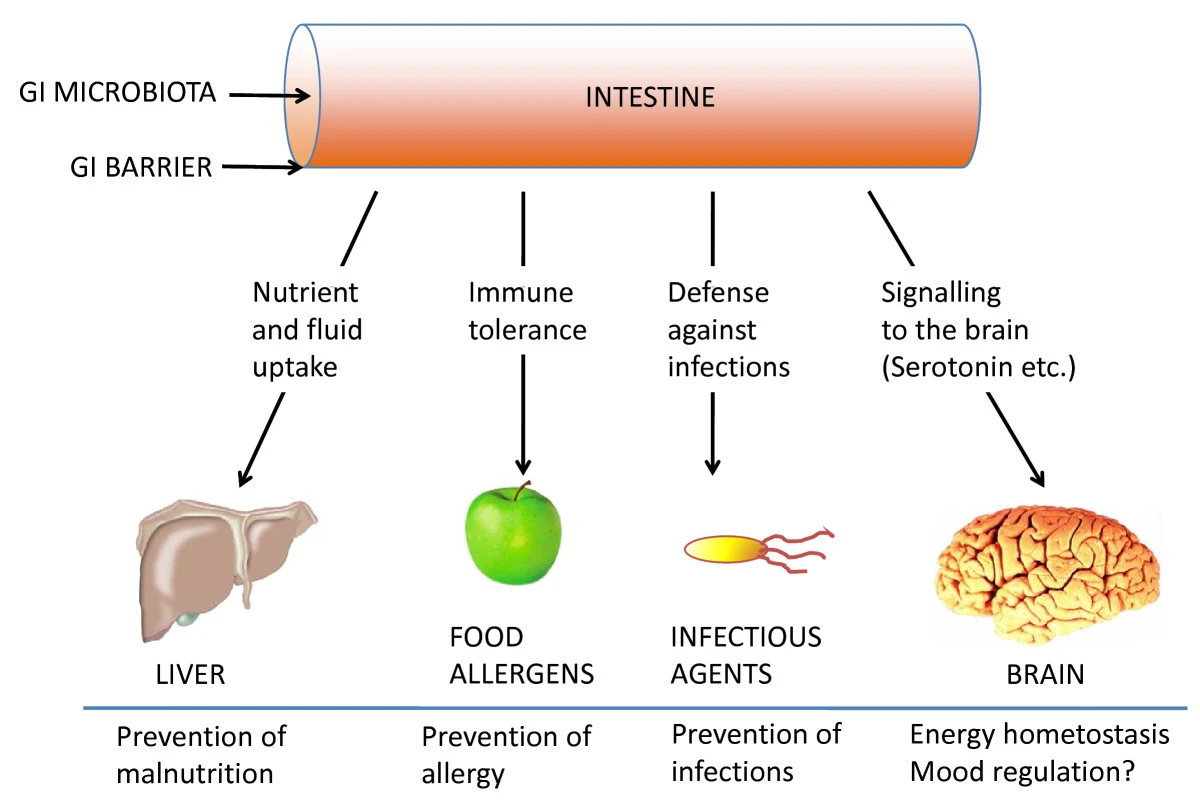
PHOTO: 'Gut health': a new objective in medicine?
The intestine's impact on health. The gastrointestinal tract contributes to health by ensuring digestion and absorption of nutrients, minerals and fluids; by induction of mucosal and systemic tolerance; by defence of the host against infectious and other pathogens; and by signalling from the periphery to the brain.
Picture posted by BMC Medicine on 14 March 2011
https://blogger.googleusercontent.com/img/b/R29vZ2xl/AVvXsEh1QTdjLeKUZTO9kONfiUrOUYbW2U006saQYZLOY6H_2J7RCoYiR5UIVpHs3U1tvmcNljGfNk6w9nDf2uKE85QmClB9iUE72KQ9JageNxUq_wP8fPqtgUA1gqA6I_LXrGpU2tvmuw1vbGU/s1200/12916_2011_Article_373_Fig1_HTML.png
https://media.springernature.com/full/springer-static/image/art%3A10.1186%2F1741-7015-9-24/MediaObjects/12916_2011_Article_373_Fig1_HTML.jpg?as=webp
https://bmcmedicine.biomedcentral.com/articles/10.1186/1741-7015-9-24/figures/1
https://bmcmedicine.biomedcentral.com/articles/10.1186/1741-7015-9-24
“The gut is our internal barrier protecting us from the outside world, all these foreign particles that you eat and drink. That alone tells you how important the microbiome is for immunity,” Lipman says.
Not so long ago many people considered gut health a taboo subject, says Dr Ursula Levine, an Austrian-born medical doctor who works at medical spas including the Lanserhof at the Arts Club in London’s Mayfair.

The intestine's impact on health. The gastrointestinal tract contributes to health by ensuring digestion and absorption of nutrients, minerals and fluids; by induction of mucosal and systemic tolerance; by defence of the host against infectious and other pathogens; and by signalling from the periphery to the brain.
Picture posted by BMC Medicine on 14 March 2011
https://blogger.googleusercontent.com/img/b/R29vZ2xl/AVvXsEh1QTdjLeKUZTO9kONfiUrOUYbW2U006saQYZLOY6H_2J7RCoYiR5UIVpHs3U1tvmcNljGfNk6w9nDf2uKE85QmClB9iUE72KQ9JageNxUq_wP8fPqtgUA1gqA6I_LXrGpU2tvmuw1vbGU/s1200/12916_2011_Article_373_Fig1_HTML.png
https://media.springernature.com/full/springer-static/image/art%3A10.1186%2F1741-7015-9-24/MediaObjects/12916_2011_Article_373_Fig1_HTML.jpg?as=webp
https://bmcmedicine.biomedcentral.com/articles/10.1186/1741-7015-9-24/figures/1
https://bmcmedicine.biomedcentral.com/articles/10.1186/1741-7015-9-24
“The gut is our internal barrier protecting us from the outside world, all these foreign particles that you eat and drink. That alone tells you how important the microbiome is for immunity,” Lipman says.
Not so long ago many people considered gut health a taboo subject, says Dr Ursula Levine, an Austrian-born medical doctor who works at medical spas including the Lanserhof at the Arts Club in London’s Mayfair.
PHOTO: Dr Ursula Levine, works at medical spas including the Lanserhof at the Arts Club in London’s Mayfair.
PHOTO: Ursula Levine
Picture posted by Tara Loader Wilkinson, South China Morning Post, Asiaone on 07 March 2021 at 4:00 pm
https://blogger.googleusercontent.com/img/b/R29vZ2xl/AVvXsEgiC6imcJSTlypRSTEAkKkp4gHaxpMW3J9gZhP9ZEHDD_pABGWS738Z0fjRkRncu3JcV_FtYJ6P61ukzqNli4YGrmaWmSLw2Cbb_UI5V0WUWWhB5Z8Q9LlRaqeWipztVp4VUF5P_kTNrGs/s657/prof_1.png
https://www.asiaone.com/sites/default/files/inline-images/prof.PNG
https://www.asiaone.com/lifestyle/your-gut-microbiome-defends-against-covid-19-so-keep-it-healthy
“Back in the ’90s, gut health was not dinner conversation,” she says. “Even now, some of our patients still think we’re talking about breaking wind when we speak of gut health.”
Now that more people are suffering digestive issues or diseases linked to gut health, known as dysbiosis, the subject has taken on greater recognition. In Hong Kong today, about 40 per cent of the local population suffers from poor gut health.
Lipman believes that the developed world is suffering from “a poor gut health epidemic”. He treats patients of all ages, but increasingly women in their early 20s and 30s, suffering from symptoms including digestive problems, skin issues, depression, fatigue, weight issues, hormone issues and mood swings. All of these he puts down to an imbalance in the gut microbiome, treatable with a change in diet, lifestyle and supplements.

PHOTO: Ursula Levine
Picture posted by Tara Loader Wilkinson, South China Morning Post, Asiaone on 07 March 2021 at 4:00 pm
https://blogger.googleusercontent.com/img/b/R29vZ2xl/AVvXsEgiC6imcJSTlypRSTEAkKkp4gHaxpMW3J9gZhP9ZEHDD_pABGWS738Z0fjRkRncu3JcV_FtYJ6P61ukzqNli4YGrmaWmSLw2Cbb_UI5V0WUWWhB5Z8Q9LlRaqeWipztVp4VUF5P_kTNrGs/s657/prof_1.png
https://www.asiaone.com/sites/default/files/inline-images/prof.PNG
https://www.asiaone.com/lifestyle/your-gut-microbiome-defends-against-covid-19-so-keep-it-healthy
“Back in the ’90s, gut health was not dinner conversation,” she says. “Even now, some of our patients still think we’re talking about breaking wind when we speak of gut health.”
Now that more people are suffering digestive issues or diseases linked to gut health, known as dysbiosis, the subject has taken on greater recognition. In Hong Kong today, about 40 per cent of the local population suffers from poor gut health.
Lipman believes that the developed world is suffering from “a poor gut health epidemic”. He treats patients of all ages, but increasingly women in their early 20s and 30s, suffering from symptoms including digestive problems, skin issues, depression, fatigue, weight issues, hormone issues and mood swings. All of these he puts down to an imbalance in the gut microbiome, treatable with a change in diet, lifestyle and supplements.
PHOTO: Lipman believes that the developed world is suffering from “a poor gut health epidemic”. He treats patients of all ages, but increasingly women in their early 20s and 30s, suffering from symptoms including digestive problems, skin issues, depression, fatigue, weight issues, hormone issues and mood swings. All of these he puts down to an imbalance in the gut microbiome, treatable with a change in diet, lifestyle and supplements.
Picture posted by naver.com
https://blogger.googleusercontent.com/img/b/R29vZ2xl/AVvXsEgAPS2Ylkxb9_BhyQooNtoCSyEcKFnJ0MHVtQhqzhtm4Sc65CLdjep-1csPtRx7D1GqITIlLxIbOgqZy0i8zwm_qiqwgAbbHYE4Pr3q73F_jJNGeuNLaIqSuDgnamnoakZ6Bp6jqwZvGWk/s1370/GettyImages-827006658.jpg
https://post-phinf.pstatic.net/MjAxODEwMTZfMTE4/MDAxNTM5NjYyODMwNDk5.yAwx5Gl132vCBOo-R9QoNBztkXdrzUq9OEveIovX5U0g.z4Jzexc9wWu4dAVDlDrvQwsnMFJNC1E5bHWW9GqB6TQg.JPEG/GettyImages-827006658.jpg?type=w1200
https://post.naver.com/viewer/postView.nhn?volumeNo=16894319&memberNo=34613949
Additional reasons for the decline of gut health can be found on the surface of our agricultural produce, in the form of herbicides, insecticides, fungicides and harvest aids. Glyphosate, for example, the main ingredient in the controversial weedkiller Roundup, is the most commonly found chemical herbicide on the planet – and there is growing research to support that it causes cancer.
The chances are that some of the food you eat will contain this chemical, particularly if you live in the US, says Lipman. “Problems with our gut start when the lining, which is very thin, gets damaged, often by chemicals found in or on foods,” he says. “That is when you get a leaky gut, and metabolites from the bacteria in your microbiome can leak into the bloodstream and cause an inflammatory immune system reaction.”

Picture posted by naver.com
https://blogger.googleusercontent.com/img/b/R29vZ2xl/AVvXsEgAPS2Ylkxb9_BhyQooNtoCSyEcKFnJ0MHVtQhqzhtm4Sc65CLdjep-1csPtRx7D1GqITIlLxIbOgqZy0i8zwm_qiqwgAbbHYE4Pr3q73F_jJNGeuNLaIqSuDgnamnoakZ6Bp6jqwZvGWk/s1370/GettyImages-827006658.jpg
https://post-phinf.pstatic.net/MjAxODEwMTZfMTE4/MDAxNTM5NjYyODMwNDk5.yAwx5Gl132vCBOo-R9QoNBztkXdrzUq9OEveIovX5U0g.z4Jzexc9wWu4dAVDlDrvQwsnMFJNC1E5bHWW9GqB6TQg.JPEG/GettyImages-827006658.jpg?type=w1200
https://post.naver.com/viewer/postView.nhn?volumeNo=16894319&memberNo=34613949
Additional reasons for the decline of gut health can be found on the surface of our agricultural produce, in the form of herbicides, insecticides, fungicides and harvest aids. Glyphosate, for example, the main ingredient in the controversial weedkiller Roundup, is the most commonly found chemical herbicide on the planet – and there is growing research to support that it causes cancer.
The chances are that some of the food you eat will contain this chemical, particularly if you live in the US, says Lipman. “Problems with our gut start when the lining, which is very thin, gets damaged, often by chemicals found in or on foods,” he says. “That is when you get a leaky gut, and metabolites from the bacteria in your microbiome can leak into the bloodstream and cause an inflammatory immune system reaction.”

PHOTO: Additional reasons for the decline of gut health can be found on the surface of our agricultural produce, in the form of herbicides, insecticides, fungicides and harvest aids. Glyphosate, for example, the main ingredient in the controversial weedkiller Roundup, is the most commonly found chemical herbicide on the planet – and there is growing research to support that it causes cancer.
Picture posted by girltripped, WinterWolf Studios on 27 September 2010 - Carrot thief
gif file generated by Animated Images Effects Generator at http://www.webestools.com/animated-images-effect-generator-effects-gif-images-picture-blog-gif-fx-images-animated-effect.html
https://blogger.googleusercontent.com/img/b/R29vZ2xl/AVvXsEjhid-nx_0YT4Akj6tJkVquoB_FyGiLJvIFKam03C_oAJkEhfujxahXihDam16FA_oFC9DOq_aMrys4842hBYY5LQkqsXDa3nsQ1rsOx0VGJc2Y8AHGdBMZ38z_s86E26cuaid3e86Fs78/s750/d2zla6c-b24a0772-22be-4b8b-b310-b7c776bb0b4a.jpg
https://blogger.googleusercontent.com/img/b/R29vZ2xl/AVvXsEj8MB50_IP51K_pjbsFfnNx8LoNkj48CJNgPBMkeSusIA_iExw7jfBT4M3KD05dRn-tX5Em9MVtMjLnStqKu5ka8lYTZddWhJnPa97UoRjRY_wdxo0g_GeHcKSTe_wQW2iOJvONadZBJjE/s978/d2zla6c-b24a0772-22be-4b8b-b310-b7c776bb0b4a_1.gif
https://images-wixmp-ed30a86b8c4ca887773594c2.wixmp.com/f/9857b542-9d73-4a42-9943-cad14ab333da/d2zla6c-b24a0772-22be-4b8b-b310-b7c776bb0b4a.jpg?token=eyJ0eXAiOiJKV1QiLCJhbGciOiJIUzI1NiJ9.eyJzdWIiOiJ1cm46YXBwOiIsImlzcyI6InVybjphcHA6Iiwib2JqIjpbW3sicGF0aCI6IlwvZlwvOTg1N2I1NDItOWQ3My00YTQyLTk5NDMtY2FkMTRhYjMzM2RhXC9kMnpsYTZjLWIyNGEwNzcyLTIyYmUtNGI4Yi1iMzEwLWI3Yzc3NmJiMGI0YS5qcGcifV1dLCJhdWQiOlsidXJuOnNlcnZpY2U6ZmlsZS5kb3dubG9hZCJdfQ._vGnbqZHHF2W4TYrZ46erK-zbXJTxw0qP3xhS2cE0FY
https://www.deviantart.com/girltripped/art/Carrot-thief-180711876
Worryingly, he is noticing more young people suffering from autoimmune diseases, which he believes can be traced back to too many antibiotics prescribed in childhood or teenage years. A leaky gut can almost always be healed, he says, usually starting with prebiotics – compounds in food that induce the growth or activity of beneficial microorganisms such as bacteria and fungi; a detox programme; postbiotics (by-products of the fermentation of probiotics); and supplements including fish oil, omega 3 and fatty acids.
Our gut issues are also self-inflicted. Levine believes that our guts are increasingly unbalanced by the amount of processed food and sugar we consume. Hong Kong adults are estimated to be eating twice the recommended level of salt, and too much sugar. The World Health Organisation recommends people eat no more than five grams of salt – slightly less than one level teaspoon, and no more than 50g of sugar – about 10 cubes, per day.
Looking after our gut is even more crucial during the coronavirus pandemic. A recent study by the Chinese University of Hong Kong found that imbalances in gut bacteria are linked to the severity of the disease.
In the study, which collected blood, stool samples and patient records from 100 Covid-19 patients 30 days after being discharged from hospital, certain bacteria were under-represented compared with non-Covid-19 patients. The report suggested that the immune response was weaker in those with fewer bacteria.
Lipman hopes that a silver lining of Covid-19 will be to make people realise the importance of a strong immune system to deal with novel viruses and other public health crises.
“There is a correlation between the health of the gut microbiome and how you’re going to deal with [Covid-19]. If people are generally unhealthy, the same thing will happen again, another year.”

Picture posted by girltripped, WinterWolf Studios on 27 September 2010 - Carrot thief
gif file generated by Animated Images Effects Generator at http://www.webestools.com/animated-images-effect-generator-effects-gif-images-picture-blog-gif-fx-images-animated-effect.html
https://blogger.googleusercontent.com/img/b/R29vZ2xl/AVvXsEjhid-nx_0YT4Akj6tJkVquoB_FyGiLJvIFKam03C_oAJkEhfujxahXihDam16FA_oFC9DOq_aMrys4842hBYY5LQkqsXDa3nsQ1rsOx0VGJc2Y8AHGdBMZ38z_s86E26cuaid3e86Fs78/s750/d2zla6c-b24a0772-22be-4b8b-b310-b7c776bb0b4a.jpg
https://blogger.googleusercontent.com/img/b/R29vZ2xl/AVvXsEj8MB50_IP51K_pjbsFfnNx8LoNkj48CJNgPBMkeSusIA_iExw7jfBT4M3KD05dRn-tX5Em9MVtMjLnStqKu5ka8lYTZddWhJnPa97UoRjRY_wdxo0g_GeHcKSTe_wQW2iOJvONadZBJjE/s978/d2zla6c-b24a0772-22be-4b8b-b310-b7c776bb0b4a_1.gif
https://images-wixmp-ed30a86b8c4ca887773594c2.wixmp.com/f/9857b542-9d73-4a42-9943-cad14ab333da/d2zla6c-b24a0772-22be-4b8b-b310-b7c776bb0b4a.jpg?token=eyJ0eXAiOiJKV1QiLCJhbGciOiJIUzI1NiJ9.eyJzdWIiOiJ1cm46YXBwOiIsImlzcyI6InVybjphcHA6Iiwib2JqIjpbW3sicGF0aCI6IlwvZlwvOTg1N2I1NDItOWQ3My00YTQyLTk5NDMtY2FkMTRhYjMzM2RhXC9kMnpsYTZjLWIyNGEwNzcyLTIyYmUtNGI4Yi1iMzEwLWI3Yzc3NmJiMGI0YS5qcGcifV1dLCJhdWQiOlsidXJuOnNlcnZpY2U6ZmlsZS5kb3dubG9hZCJdfQ._vGnbqZHHF2W4TYrZ46erK-zbXJTxw0qP3xhS2cE0FY
https://www.deviantart.com/girltripped/art/Carrot-thief-180711876
Worryingly, he is noticing more young people suffering from autoimmune diseases, which he believes can be traced back to too many antibiotics prescribed in childhood or teenage years. A leaky gut can almost always be healed, he says, usually starting with prebiotics – compounds in food that induce the growth or activity of beneficial microorganisms such as bacteria and fungi; a detox programme; postbiotics (by-products of the fermentation of probiotics); and supplements including fish oil, omega 3 and fatty acids.
Our gut issues are also self-inflicted. Levine believes that our guts are increasingly unbalanced by the amount of processed food and sugar we consume. Hong Kong adults are estimated to be eating twice the recommended level of salt, and too much sugar. The World Health Organisation recommends people eat no more than five grams of salt – slightly less than one level teaspoon, and no more than 50g of sugar – about 10 cubes, per day.
Looking after our gut is even more crucial during the coronavirus pandemic. A recent study by the Chinese University of Hong Kong found that imbalances in gut bacteria are linked to the severity of the disease.
In the study, which collected blood, stool samples and patient records from 100 Covid-19 patients 30 days after being discharged from hospital, certain bacteria were under-represented compared with non-Covid-19 patients. The report suggested that the immune response was weaker in those with fewer bacteria.
Lipman hopes that a silver lining of Covid-19 will be to make people realise the importance of a strong immune system to deal with novel viruses and other public health crises.
“There is a correlation between the health of the gut microbiome and how you’re going to deal with [Covid-19]. If people are generally unhealthy, the same thing will happen again, another year.”
PHOTO: Functional medicine doctor and author Frank Lipman.
PHOTO: Frank Lipman
Picture posted by Tara Loader Wilkinson, South China Morning Post, Asiaone on 07 March 2021 at 4:00 pm
https://blogger.googleusercontent.com/img/b/R29vZ2xl/AVvXsEhGuQ88wd2ER0y4y1EkbjjXvrj4hNL0RUpUm7zYB8jpI8Uvqte2tqxV18X8p1XM33vE4CdTq1ZacNLU8Nuc-dn1vqUPDyOPN7q-59HJfKpMEBUvF1IjRMrxhXeAwXOoVhZgWDOdhxr1zI0/s659/GUY.PNG
https://www.asiaone.com/sites/default/files/inline-images/GUY.PNG
https://www.asiaone.com/lifestyle/your-gut-microbiome-defends-against-covid-19-so-keep-it-healthy
PHOTO: Frank Lipman
Picture posted by Tara Loader Wilkinson, South China Morning Post, Asiaone on 07 March 2021 at 4:00 pm
https://blogger.googleusercontent.com/img/b/R29vZ2xl/AVvXsEhGuQ88wd2ER0y4y1EkbjjXvrj4hNL0RUpUm7zYB8jpI8Uvqte2tqxV18X8p1XM33vE4CdTq1ZacNLU8Nuc-dn1vqUPDyOPN7q-59HJfKpMEBUvF1IjRMrxhXeAwXOoVhZgWDOdhxr1zI0/s659/GUY.PNG
https://www.asiaone.com/sites/default/files/inline-images/GUY.PNG
https://www.asiaone.com/lifestyle/your-gut-microbiome-defends-against-covid-19-so-keep-it-healthy
How to replenish your gut
Lipman and Levine suggest the following ways to safeguard your digestive system.
Antibiotics indiscriminately kill bad and good bacteria, but if you must take a course, take a probiotic to restore healthy gut flora.
Increase your intake of resistant starch, a carbohydrate that resists digestion in the small intestine and ferments in the large intestine to act as a prebiotic and feed the good bacteria in the gut. It is found in oats and in cooked, cooled potatoes and cooked, cooled rice.
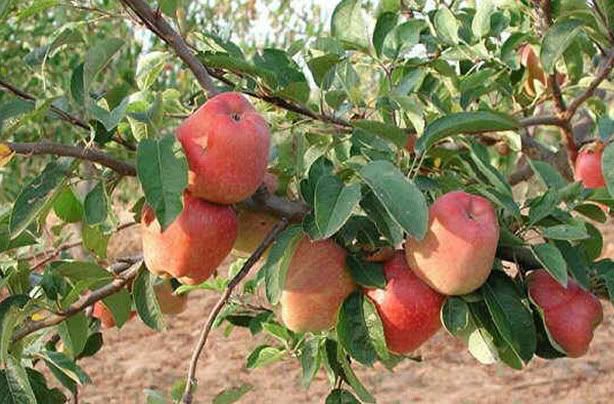
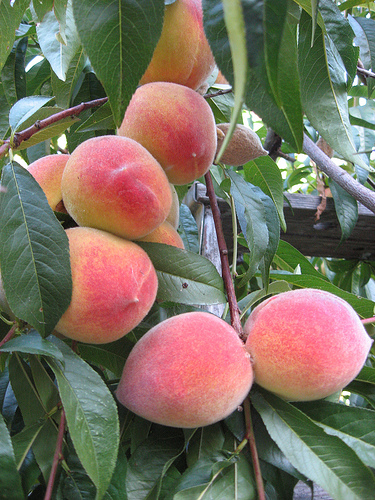
Eat plants of lots of different colours but especially leafy greens, ideally 30 different varieties of fruit and vegetables a week. Blue or purple plants contain antioxidants, yellow or orange plants contain carotenoids/vitamin A.

PHOTO: Antibiotics indiscriminately kill bad and good bacteria, but if you must take a course, take a probiotic to restore healthy gut flora.
Increase your intake of resistant starch, a carbohydrate that resists digestion in the small intestine and ferments in the large intestine to act as a prebiotic and feed the good bacteria in the gut. It is found in oats and in cooked, cooled potatoes and cooked, cooled rice.
Eat plants of lots of different colours but especially leafy greens, ideally 30 different varieties of fruit and vegetables a week. Blue or purple plants contain antioxidants, yellow or orange plants contain carotenoids/vitamin A.
Picture posted by Ding Yi, yiding@caixin.com on 03 March 2021 at 06:17 pm
https://blogger.googleusercontent.com/img/b/R29vZ2xl/AVvXsEh9ukTNzyr1n6spurCFNgPQmtNKp9vY09SVpYejkbJn_Rvfcz0ego2qjfJpjE4ZZcor75VDzQdkVPlYonCA-PwHQl-DfyZwmkuZI2Wk8VTsseWLLFVNyHm1wyQqFSQSyMwXF-IUAVyq_F8/s2048/1614766649680330.jpg
https://img.caixin.com/2021-03-03/1614766649680330.jpg
https://www.caixinglobal.com/2021-03-05/south-korean-ev-battery-makers-misconduct-extraordinary-says-us-trade-agency-101671042.html
Eat fermented foods such as sauerkraut, kimchi, kefir and sourdough bread to increase healthy gut flora.
Limit processed foods, fried foods, alcohol, caffeine and sugar.
Non-organic fruit and vegetables often are treated with pesticides which can damage the gut’s lining, so where possible buy organic. You can also buy vegetable soaps to wash your produce before consuming.

Increase your intake of resistant starch, a carbohydrate that resists digestion in the small intestine and ferments in the large intestine to act as a prebiotic and feed the good bacteria in the gut. It is found in oats and in cooked, cooled potatoes and cooked, cooled rice.
Eat plants of lots of different colours but especially leafy greens, ideally 30 different varieties of fruit and vegetables a week. Blue or purple plants contain antioxidants, yellow or orange plants contain carotenoids/vitamin A.
Picture posted by Ding Yi, yiding@caixin.com on 03 March 2021 at 06:17 pm
https://blogger.googleusercontent.com/img/b/R29vZ2xl/AVvXsEh9ukTNzyr1n6spurCFNgPQmtNKp9vY09SVpYejkbJn_Rvfcz0ego2qjfJpjE4ZZcor75VDzQdkVPlYonCA-PwHQl-DfyZwmkuZI2Wk8VTsseWLLFVNyHm1wyQqFSQSyMwXF-IUAVyq_F8/s2048/1614766649680330.jpg
https://img.caixin.com/2021-03-03/1614766649680330.jpg
https://www.caixinglobal.com/2021-03-05/south-korean-ev-battery-makers-misconduct-extraordinary-says-us-trade-agency-101671042.html
Eat fermented foods such as sauerkraut, kimchi, kefir and sourdough bread to increase healthy gut flora.
Limit processed foods, fried foods, alcohol, caffeine and sugar.
Non-organic fruit and vegetables often are treated with pesticides which can damage the gut’s lining, so where possible buy organic. You can also buy vegetable soaps to wash your produce before consuming.
PHOTO: Where possible buy organic. You can also buy vegetable soaps to wash your produce before consuming.
Picture posted by Vietnam Insider on 17 April 2020
https://blogger.googleusercontent.com/img/b/R29vZ2xl/AVvXsEg6D5Vjb1BveW-y13hyphenhyphenLfcS7Q9ZOLyR41uScPI7tqPAORxTt9sHTbi5h5OUbY4q-IxOcM77x7ksgPbSxVblJC7ZH1103vScyURYfF686jjwwuFjWUNjp2kQVO_7gbDQsZyUGcRSXu4GRV4/s800/56F0ADF0-B53C-4B57-85B2-4BD4DE8A1D33-e1583938210650.jpeg
https://vietnaminsider.vn/wp-content/uploads/2019/08/56F0ADF0-B53C-4B57-85B2-4BD4DE8A1D33-e1583938210650.jpeg
https://vietnaminsider.vn/heres-how-vietnam-can-expand-export-markets-for-its-agricultural-produce/
Try fasting to give your digestion a rest, such as the 5:2 diet – eat normally for five days a week and on the other two, have only about a quarter of the calories for your daily needs, about 500 or 600. Or try intermittent fasting, in which you eat only during a restricted window each day, say from 2pm to 8pm.
Picture posted by Vietnam Insider on 17 April 2020
https://blogger.googleusercontent.com/img/b/R29vZ2xl/AVvXsEg6D5Vjb1BveW-y13hyphenhyphenLfcS7Q9ZOLyR41uScPI7tqPAORxTt9sHTbi5h5OUbY4q-IxOcM77x7ksgPbSxVblJC7ZH1103vScyURYfF686jjwwuFjWUNjp2kQVO_7gbDQsZyUGcRSXu4GRV4/s800/56F0ADF0-B53C-4B57-85B2-4BD4DE8A1D33-e1583938210650.jpeg
https://vietnaminsider.vn/wp-content/uploads/2019/08/56F0ADF0-B53C-4B57-85B2-4BD4DE8A1D33-e1583938210650.jpeg
https://vietnaminsider.vn/heres-how-vietnam-can-expand-export-markets-for-its-agricultural-produce/
Try fasting to give your digestion a rest, such as the 5:2 diet – eat normally for five days a week and on the other two, have only about a quarter of the calories for your daily needs, about 500 or 600. Or try intermittent fasting, in which you eat only during a restricted window each day, say from 2pm to 8pm.
This article was first published in South China Morning Post.


PHOTO: Limit processed foods, fried foods, alcohol, caffeine and sugar. Eat normally for five days a week and on the other two, have only about a quarter of the calories for your daily needs, about 500 or 600.
Picture posted by girltripped, WinterWolf Studios on 24 April 2011 - Vegetable Garden
gif file generated by Animated Images Effects Generator at http://www.webestools.com/animated-images-effect-generator-effects-gif-images-picture-blog-gif-fx-images-animated-effect.html
https://blogger.googleusercontent.com/img/b/R29vZ2xl/AVvXsEj1IavCVScCbehchq007b7fjgN8xjUtskqTKUzzIaV-zoQr-qj82KVlEKgxniP2VnQyNGhxBdJmwDQNhqgkgl5hYs0SaHnmAt6aVcR_XOKGxhgf0fEgfIDr_SbpNxKNB7XOgCdceWEd-CU/s750/d3eos2r-bb8c5455-4ba4-4290-8d36-27fa26d45d8f.jpg
https://blogger.googleusercontent.com/img/b/R29vZ2xl/AVvXsEjELvvo1DOLUaZYtEeqgUOsUP5b5CYgd4sNBCS6Pd3w5NeYUxjxVrJdxtgABqoLS91CQu4ztDg81fIr3P3TSl_fDbi6wS9MHFGo41q2waJEJOdS8ZmHu3kE-LSrfJI-HCeHprpUTB7nfgk/s558/d3eos2r-bb8c5455-4ba4-4290-8d36-27fa26d45d8f_1.gif
https://images-wixmp-ed30a86b8c4ca887773594c2.wixmp.com/f/9857b542-9d73-4a42-9943-cad14ab333da/d3eos2r-bb8c5455-4ba4-4290-8d36-27fa26d45d8f.jpg?token=eyJ0eXAiOiJKV1QiLCJhbGciOiJIUzI1NiJ9.eyJzdWIiOiJ1cm46YXBwOiIsImlzcyI6InVybjphcHA6Iiwib2JqIjpbW3sicGF0aCI6IlwvZlwvOTg1N2I1NDItOWQ3My00YTQyLTk5NDMtY2FkMTRhYjMzM2RhXC9kM2VvczJyLWJiOGM1NDU1LTRiYTQtNDI5MC04ZDM2LTI3ZmEyNmQ0NWQ4Zi5qcGcifV1dLCJhdWQiOlsidXJuOnNlcnZpY2U6ZmlsZS5kb3dubG9hZCJdfQ.JUevyG_16lHNxLsmJSMW0PQxTpoFpUEI-45dUe8sm14
https://www.deviantart.com/girltripped/art/Vegetable-Garden-206069283
Picture posted by girltripped, WinterWolf Studios on 24 April 2011 - Vegetable Garden
gif file generated by Animated Images Effects Generator at http://www.webestools.com/animated-images-effect-generator-effects-gif-images-picture-blog-gif-fx-images-animated-effect.html
https://blogger.googleusercontent.com/img/b/R29vZ2xl/AVvXsEj1IavCVScCbehchq007b7fjgN8xjUtskqTKUzzIaV-zoQr-qj82KVlEKgxniP2VnQyNGhxBdJmwDQNhqgkgl5hYs0SaHnmAt6aVcR_XOKGxhgf0fEgfIDr_SbpNxKNB7XOgCdceWEd-CU/s750/d3eos2r-bb8c5455-4ba4-4290-8d36-27fa26d45d8f.jpg
https://blogger.googleusercontent.com/img/b/R29vZ2xl/AVvXsEjELvvo1DOLUaZYtEeqgUOsUP5b5CYgd4sNBCS6Pd3w5NeYUxjxVrJdxtgABqoLS91CQu4ztDg81fIr3P3TSl_fDbi6wS9MHFGo41q2waJEJOdS8ZmHu3kE-LSrfJI-HCeHprpUTB7nfgk/s558/d3eos2r-bb8c5455-4ba4-4290-8d36-27fa26d45d8f_1.gif
https://images-wixmp-ed30a86b8c4ca887773594c2.wixmp.com/f/9857b542-9d73-4a42-9943-cad14ab333da/d3eos2r-bb8c5455-4ba4-4290-8d36-27fa26d45d8f.jpg?token=eyJ0eXAiOiJKV1QiLCJhbGciOiJIUzI1NiJ9.eyJzdWIiOiJ1cm46YXBwOiIsImlzcyI6InVybjphcHA6Iiwib2JqIjpbW3sicGF0aCI6IlwvZlwvOTg1N2I1NDItOWQ3My00YTQyLTk5NDMtY2FkMTRhYjMzM2RhXC9kM2VvczJyLWJiOGM1NDU1LTRiYTQtNDI5MC04ZDM2LTI3ZmEyNmQ0NWQ4Zi5qcGcifV1dLCJhdWQiOlsidXJuOnNlcnZpY2U6ZmlsZS5kb3dubG9hZCJdfQ.JUevyG_16lHNxLsmJSMW0PQxTpoFpUEI-45dUe8sm14
https://www.deviantart.com/girltripped/art/Vegetable-Garden-206069283
By Tara Loader Wilkinson, South China Morning Post, Asiaone, 07 March 2021 at 4:00 pm
Cosplay (Links)
Busan International Film Festival (BIFF)
Japanese Samba Carnival (links)
Asakusa Samba Carnival (links)
Brazilian Samba Carnival (links)
Scandinavian Samba Carnival (links)
Other stories
Nursing stories
Healthcare stories (links)
Strange thing (Links)
Busan International Film Festival (BIFF)
Japanese Samba Carnival (links)
Asakusa Samba Carnival (links)
Brazilian Samba Carnival (links)
Scandinavian Samba Carnival (links)
Other stories
Nursing stories
Strange thing (Links)
Reference
[1] Tara Loader Wilkinson, South China Morning Post, Asiaone, Your gut microbiome defends against Covid-19, so keep it healthy, posted on 07 March 2021 at 4:00 pm, https://www.asiaone.com/lifestyle/your-gut-microbiome-defends-against-covid-19-so-keep-it-healthy
Links
Antibiotics -
https://www.scmp.com/lifestyle/health-wellness/article/3082709/higher-antibiotic-resistance-china-linked-drugs-sold
processed foods - https://www.scmp.com/lifestyle/health-wellness/article/3035131/how-diets-full-ultra-processed-foods-are-causing
alcohol - https://www.scmp.com/lifestyle/health-wellness/article/3082889/i-stopped-drinking-alcohol-year-health-benefits-mental
intermittent fasting - https://www.scmp.com/lifestyle/health-wellness/article/2146024/intermittent-fasting-more-just-weight-loss-regimen-says-10
South China Morning Post - https://www.scmp.com/lifestyle/health-wellness/article/3123116/how-your-gut-microbiome-defends-against-covid-19-and
processed foods - https://www.scmp.com/lifestyle/health-wellness/article/3035131/how-diets-full-ultra-processed-foods-are-causing
alcohol - https://www.scmp.com/lifestyle/health-wellness/article/3082889/i-stopped-drinking-alcohol-year-health-benefits-mental
intermittent fasting - https://www.scmp.com/lifestyle/health-wellness/article/2146024/intermittent-fasting-more-just-weight-loss-regimen-says-10
South China Morning Post - https://www.scmp.com/lifestyle/health-wellness/article/3123116/how-your-gut-microbiome-defends-against-covid-19-and
Cosplay (Links) - https://veryfatoldman.blogspot.com/2020/10/cosplay-links.html
Busan International Film Festival (BIFF) - https://veryfatoldman.blogspot.com/2020/09/busan-international-film-festival-biff.html
Japanese Samba Carnival (links) - https://veryfatoldman.blogspot.com/2020/10/japanese-samba-carnival-links.html
Busan International Film Festival (BIFF) - https://veryfatoldman.blogspot.com/2020/09/busan-international-film-festival-biff.html
Japanese Samba Carnival (links) - https://veryfatoldman.blogspot.com/2020/10/japanese-samba-carnival-links.html
Asakusa Samba Carnival (links) - https://veryfatoldman.blogspot.com/2020/10/asakusa-samba-carnival.html
Brazilian Samba Carnival - https://veryfatoldman.blogspot.com/2020/10/brazilian-samba-carnival-links.html
Scandinavian Samba Carnival (links) - https://veryfatoldman.blogspot.com/2020/10/scandinavian-samba-carnival-links.html
Other stories - https://veryfatoldman.blogspot.com/2020/05/other-stories.html
Healthcare stories (links) - https://veryfatoldman.blogspot.com/2021/01/healthcare-stories-links.html
- https://blogger.googleusercontent.com/img/b/R29vZ2xl/AVvXsEhNBMtmUxcV1W2oV4-TRlPlmv2cfdTaOnW9FWFRksT0Ro-McOUrvi2iICG5i1EhPLjnJLXnqVkdNpcMVyys7EXXgYafgXWvxVPhNbZiRcRMPHMyfargHP8WT2AizIohMGE15EOOx9mGvDc/s800/20200301_digestive_fb.jpg
- https://www.asiaone.com/sites/default/files/styles/article_main_image/public/original_images/Mar2021/20200301_digestive_fb.jpg?itok=KOAgSVhv
- https://www.asiaone.com/lifestyle/your-gut-microbiome-defends-against-covid-19-so-keep-it-healthy
- https://blogger.googleusercontent.com/img/b/R29vZ2xl/AVvXsEh1QTdjLeKUZTO9kONfiUrOUYbW2U006saQYZLOY6H_2J7RCoYiR5UIVpHs3U1tvmcNljGfNk6w9nDf2uKE85QmClB9iUE72KQ9JageNxUq_wP8fPqtgUA1gqA6I_LXrGpU2tvmuw1vbGU/s1200/12916_2011_Article_373_Fig1_HTML.png
- https://media.springernature.com/full/springer-static/image/art%3A10.1186%2F1741-7015-9-24/MediaObjects/12916_2011_Article_373_Fig1_HTML.jpg?as=webp
- https://bmcmedicine.biomedcentral.com/articles/10.1186/1741-7015-9-24/figures/1
- https://bmcmedicine.biomedcentral.com/articles/10.1186/1741-7015-9-24
- https://blogger.googleusercontent.com/img/b/R29vZ2xl/AVvXsEgiC6imcJSTlypRSTEAkKkp4gHaxpMW3J9gZhP9ZEHDD_pABGWS738Z0fjRkRncu3JcV_FtYJ6P61ukzqNli4YGrmaWmSLw2Cbb_UI5V0WUWWhB5Z8Q9LlRaqeWipztVp4VUF5P_kTNrGs/s657/prof_1.png
- https://www.asiaone.com/sites/default/files/inline-images/prof.PNG
- https://www.asiaone.com/lifestyle/your-gut-microbiome-defends-against-covid-19-so-keep-it-healthy
- https://blogger.googleusercontent.com/img/b/R29vZ2xl/AVvXsEgAPS2Ylkxb9_BhyQooNtoCSyEcKFnJ0MHVtQhqzhtm4Sc65CLdjep-1csPtRx7D1GqITIlLxIbOgqZy0i8zwm_qiqwgAbbHYE4Pr3q73F_jJNGeuNLaIqSuDgnamnoakZ6Bp6jqwZvGWk/s1370/GettyImages-827006658.jpg
- https://post-phinf.pstatic.net/MjAxODEwMTZfMTE4/MDAxNTM5NjYyODMwNDk5.yAwx5Gl132vCBOo-R9QoNBztkXdrzUq9OEveIovX5U0g.z4Jzexc9wWu4dAVDlDrvQwsnMFJNC1E5bHWW9GqB6TQg.JPEG/GettyImages-827006658.jpg?type=w1200
- https://post.naver.com/viewer/postView.nhn?volumeNo=16894319&memberNo=34613949
- http://www.webestools.com/animated-images-effect-generator-effects-gif-images-picture-blog-gif-fx-images-animated-effect.html
- https://blogger.googleusercontent.com/img/b/R29vZ2xl/AVvXsEjhid-nx_0YT4Akj6tJkVquoB_FyGiLJvIFKam03C_oAJkEhfujxahXihDam16FA_oFC9DOq_aMrys4842hBYY5LQkqsXDa3nsQ1rsOx0VGJc2Y8AHGdBMZ38z_s86E26cuaid3e86Fs78/s750/d2zla6c-b24a0772-22be-4b8b-b310-b7c776bb0b4a.jpg
- https://blogger.googleusercontent.com/img/b/R29vZ2xl/AVvXsEj8MB50_IP51K_pjbsFfnNx8LoNkj48CJNgPBMkeSusIA_iExw7jfBT4M3KD05dRn-tX5Em9MVtMjLnStqKu5ka8lYTZddWhJnPa97UoRjRY_wdxo0g_GeHcKSTe_wQW2iOJvONadZBJjE/s978/d2zla6c-b24a0772-22be-4b8b-b310-b7c776bb0b4a_1.gif
- https://images-wixmp-ed30a86b8c4ca887773594c2.wixmp.com/f/9857b542-9d73-4a42-9943-cad14ab333da/d2zla6c-b24a0772-22be-4b8b-b310-b7c776bb0b4a.jpg?token=eyJ0eXAiOiJKV1QiLCJhbGciOiJIUzI1NiJ9.eyJzdWIiOiJ1cm46YXBwOiIsImlzcyI6InVybjphcHA6Iiwib2JqIjpbW3sicGF0aCI6IlwvZlwvOTg1N2I1NDItOWQ3My00YTQyLTk5NDMtY2FkMTRhYjMzM2RhXC9kMnpsYTZjLWIyNGEwNzcyLTIyYmUtNGI4Yi1iMzEwLWI3Yzc3NmJiMGI0YS5qcGcifV1dLCJhdWQiOlsidXJuOnNlcnZpY2U6ZmlsZS5kb3dubG9hZCJdfQ._vGnbqZHHF2W4TYrZ46erK-zbXJTxw0qP3xhS2cE0FY
- https://www.deviantart.com/girltripped/art/Carrot-thief-180711876
- https://blogger.googleusercontent.com/img/b/R29vZ2xl/AVvXsEhGuQ88wd2ER0y4y1EkbjjXvrj4hNL0RUpUm7zYB8jpI8Uvqte2tqxV18X8p1XM33vE4CdTq1ZacNLU8Nuc-dn1vqUPDyOPN7q-59HJfKpMEBUvF1IjRMrxhXeAwXOoVhZgWDOdhxr1zI0/s659/GUY.PNG
- https://www.asiaone.com/sites/default/files/inline-images/GUY.PNG
- https://www.asiaone.com/lifestyle/your-gut-microbiome-defends-against-covid-19-so-keep-it-healthy
- https://blogger.googleusercontent.com/img/b/R29vZ2xl/AVvXsEh9ukTNzyr1n6spurCFNgPQmtNKp9vY09SVpYejkbJn_Rvfcz0ego2qjfJpjE4ZZcor75VDzQdkVPlYonCA-PwHQl-DfyZwmkuZI2Wk8VTsseWLLFVNyHm1wyQqFSQSyMwXF-IUAVyq_F8/s2048/1614766649680330.jpg
- https://img.caixin.com/2021-03-03/1614766649680330.jpg
- https://www.caixinglobal.com/2021-03-05/south-korean-ev-battery-makers-misconduct-extraordinary-says-us-trade-agency-101671042.html
- https://blogger.googleusercontent.com/img/b/R29vZ2xl/AVvXsEg6D5Vjb1BveW-y13hyphenhyphenLfcS7Q9ZOLyR41uScPI7tqPAORxTt9sHTbi5h5OUbY4q-IxOcM77x7ksgPbSxVblJC7ZH1103vScyURYfF686jjwwuFjWUNjp2kQVO_7gbDQsZyUGcRSXu4GRV4/s800/56F0ADF0-B53C-4B57-85B2-4BD4DE8A1D33-e1583938210650.jpeg
- https://vietnaminsider.vn/wp-content/uploads/2019/08/56F0ADF0-B53C-4B57-85B2-4BD4DE8A1D33-e1583938210650.jpeg
- https://vietnaminsider.vn/heres-how-vietnam-can-expand-export-markets-for-its-agricultural-produce/
- http://www.webestools.com/animated-images-effect-generator-effects-gif-images-picture-blog-gif-fx-images-animated-effect.html
- https://blogger.googleusercontent.com/img/b/R29vZ2xl/AVvXsEj1IavCVScCbehchq007b7fjgN8xjUtskqTKUzzIaV-zoQr-qj82KVlEKgxniP2VnQyNGhxBdJmwDQNhqgkgl5hYs0SaHnmAt6aVcR_XOKGxhgf0fEgfIDr_SbpNxKNB7XOgCdceWEd-CU/s750/d3eos2r-bb8c5455-4ba4-4290-8d36-27fa26d45d8f.jpg
- https://blogger.googleusercontent.com/img/b/R29vZ2xl/AVvXsEjELvvo1DOLUaZYtEeqgUOsUP5b5CYgd4sNBCS6Pd3w5NeYUxjxVrJdxtgABqoLS91CQu4ztDg81fIr3P3TSl_fDbi6wS9MHFGo41q2waJEJOdS8ZmHu3kE-LSrfJI-HCeHprpUTB7nfgk/s558/d3eos2r-bb8c5455-4ba4-4290-8d36-27fa26d45d8f_1.gif
- https://images-wixmp-ed30a86b8c4ca887773594c2.wixmp.com/f/9857b542-9d73-4a42-9943-cad14ab333da/d3eos2r-bb8c5455-4ba4-4290-8d36-27fa26d45d8f.jpg?token=eyJ0eXAiOiJKV1QiLCJhbGciOiJIUzI1NiJ9.eyJzdWIiOiJ1cm46YXBwOiIsImlzcyI6InVybjphcHA6Iiwib2JqIjpbW3sicGF0aCI6IlwvZlwvOTg1N2I1NDItOWQ3My00YTQyLTk5NDMtY2FkMTRhYjMzM2RhXC9kM2VvczJyLWJiOGM1NDU1LTRiYTQtNDI5MC04ZDM2LTI3ZmEyNmQ0NWQ4Zi5qcGcifV1dLCJhdWQiOlsidXJuOnNlcnZpY2U6ZmlsZS5kb3dubG9hZCJdfQ.JUevyG_16lHNxLsmJSMW0PQxTpoFpUEI-45dUe8sm14
- https://www.deviantart.com/girltripped/art/Vegetable-Garden-206069283


 Posts
Posts














.jpg)
.gif)